Chimère of the Langhe : Marco Porello Langhe Nebbiolo 2018

Marco Porello Langhe Nebbiolo 2018.
It is with fond memories that I revisit this wine from Marco Porello, his Nebbiolo from Roero, Piemonte. My first ever wine trip was to the country side of Piemonte, the event Nebbiolo Prima in the town of Alba. This example of Nebbiolo, not the popularly referenced wines of Barolo or Barbaresco (Twin B’s) is from the oft-overlooked though equally beautiful appellation of Roero to the north of the town of Alba. Wines, both white and red, from Roero could be defined as being slightly more fruit forward, decidedly more fine and less tannic than the twin ‘B’s’ to the south, mainly because of predominantly sandy soils and combinations therein, which in the end aid in producing a more fragrant and seemingly youthful wines. This Marco Porello Langhe Nebbiolo is not to be confused with his top tier appellation wines under the Roero DOC ( a DOC designation with more delimited/strict methods of production, much like Barolo and Barbaresco). You might consider this a ‘village’ wine in the Burgundy sense etc, etc.. In fact one might taste a Langhe Nebbiolo wine as a snap shot of the vintage before investing in the top tier wines. I like to enjoy Langhe Nebbiolo at any time with fine to simple cooking or meditating over a game of Scrabble during this Covid-19 Lockdown! So strange these times.
My feelings on this wine are as such…aromatically the wine presents pomegranate, to grapefruit and citrus peel with a distinct Red flavoured Life Saver spiced candy tone. Expanding on this red fruit aroma is like smelling a creamy frutto di bosco/wild berry medley. Underlying all of this is a gentle rose and mineral tone of earth and garden. The palate is immediate and full of pleasure - currant, ripe strawberry, pompelmo rosso. The tannin is gentle like fine chalk with moderate acidity holding up the fruit. This is quite an enjoyable and pleasant wine.
Go get some at Terroni Sud Forno e Produzione on Sackville St. close to the Distillery District.

KNOW THE RIDGE Part : 1 - Ridge Monte Bello Vineyard Sonoma
RIDGE SOMMSYMPOSIUM 2019
It was June 2019, I had been invited down to visit Ridge Winery in California. This trip would be my first ever trip to California wine country. Sonoma to be exact, visiting the 3 major Ridge Family Estates of Monte Bello, Lytton Springs and Geyserville. The entire Ridge Family of wine makers and sales team host an annual Symposium with invited Sommelier from across America, I think I might have been the first Canadian invited and I had the pleasure of meeting China’s only Master Sommelier, Yang Lu among the esteemed guests. Over the 3 days starting in Los Gatos, with a meet and greet at ‘The Bywater’ for a champagne dinner, we would on the following days taste and tour the Monte Bello Vineyards near Cupertino and then finally travel up to the Estates at Lytton Springs and Geyserville Vineyards close to the quiet town of Healdsburg.


Ridge, and their Chief Wine Maker Paul Draper are world renowned for their legendary high altitude Monte Bello Ridge Vineyards of Cabernet Sauvignon and Chardonnay. In fact Ridge Monte Bello 1971 was one of the wines presented by Stephen Spurrier at the famed ‘Judgment of Paris’ Wine tasting of 1976. An historic blind tasting hosted by Spurrier whereby he invited French Wine Judges to rate and rank wines of quality that included Chardonnay, both French and American in one flight. In the second flight, Cabernet Sauvignon/Bordeaux Blends of French and American origin . France had up until this point reigned supreme in global recognition for quality and heritage. Ridge Monte Bello ranked in the top 5 overall and the Ridge reputation was sealed. I would also add that the reputation of quality has certainly been maintained!
Ridge is also known for being a key player in pioneering the way for the ‘elevation and promotion’ of the grape Zinfandel in the region. See ZAP. Both Lytton and Geyserville Vineyards are dedicated to old vine and Heritage Zinfandel. These vineyards are special because of the unique DNA of the Field Blend. Field Blended Vineyards, historically, are a combination of different vines planted to ensure a ‘balanced’ crop and a wine of equally balanced flavour. Ridge has focused on Old Vine Zinfandel sprinkled with a blend of Southern France grapes such as Carignan, Grenache, Mataro (Mourvedre), Viognier to name a few. These Field Blended Vineyards had been acquired with an already pre-existing map of planting. That is to say the vineyards had been intentionally planted this way and have been since studied and maintained to give the Ridge Zinfandel blends their unique identity, style, let alone freshness! A freshness that is not always experienced while drinking the ‘other’ often high octane Zinfandels of California.
Day 1: We began our wine journey at the sleepy town of Los Gatos, the day opening up with a dry summer heat, very reminiscent of being somewhere in the Mediterranean. Departing for our first vineyard stop on an ascension (enter John Coltrane) up into the Santa Cruz Mountain AVA above Cupertino to see the Monte Bello Vineyards. These vineyards sit somewhere at 400 - 800 meters above sea level (m.a.s.l) and sit on one of the only places in the region that are of limestone soil. It is this limestone outcrop, sitting on top of the San Andreas Fault, which gives that special profile to Monte Bello Red (re: Cabernet Sauvignon + blend) at altitude. As I would soon learn, it is also here that they make their fantastic Monte Bello Chardonnay.
The Monte Bello Vineyards in its entirety is comprised of 4 different sub-vineyard. The lowest altitude vineyard, and where we had our introductions to the full Ridge team, is ‘Klein’ which sits at 500 m.a.s.l,. we then rise to ‘Rousten’, ‘Torre’ and ‘Perrone’ - home to the the historic Old Stone limestone cellar sitting at 800 m.a.s.l.


The Vision : to make world class chard and cab from the same sight!
Eric Baugher, COO and wine maker at the Ridge Monte Bello Vineyards took us through a proper master class of Monte Bello Chardonnay and Cabernet. I can think of few better things to be occupied with at 10am in the morning. The tasting was hosted in the upper level of the original ‘Old Stone Winery’ that had been owned originally by the Perrone Family back in the late 1800’s. Dr. Perrone established Monte Bello Ridge by creating terraced limestone vineyards and a cellar carved into the limestone earth. Monte Bello Ridge became ‘Ridge’ Monte Bello in the 1940’s when the original founding members purchased the then abandoned cellar and thereafter started to plant Cabernet on the Perrone and the then acquired Torre Vineyards. The first commercial wine sales of Ridge Monte Bello was in 1962. It was in 1969 that Paul Draper became the winemaker at Ridge and it was his hand that crafted Ridge Monte Bello Cabernet 1971 for the famous Judgment of Paris : Stephen Spurrier tasting of 1976!
Ridge Monte Bello Chardonnay Vertical
All wines were tasted June 2019.
2014 Ridge Monte Bello Chardonnay : This Ridge Chardonnay was made in a reductive style, with tones of lightly buttered popcorn, to apple and orchard fruit. Lashed with lemon, citrus peel and sweet honey comb. The palate is quite flinty, saline and mineral driven. ( I did add a note that this wine is less saline than the following vintages we would taste). The fruit on the palate is gentle of sun-sweetened golden apple as a defining character. I felt the wine be best described as clean and clear. Clarity. There is a very pleasing overall presence on the palate with quite a long finish.
2015 Ridge Monte Bello Chardonnay : 2015 showed less reduction than the 2014, with fleshy lemon and golden apple driving the wine. Orchard fruit of bruised apple and pear exhibiting sighs of evolution from bottle age and that honeycomb, lemon is softly layered with something like oat and cereal. The saline mineral note is much more apparent on the nose. The palate gives way to some texture, with fresh but less intense fruit of apple, lemon and touches of banana and spice. The wine feels warmer due to the vintage. Medium length on the finish.

2016 Ridge Monte Bello Chardonnay : 2016 carries a nice balance of reduction to fruit, with distinct golden apple, lemon and honey with an added layer of savoury herb. The mineral tone on the nose is more defined as Loire Sancerre like - silex/flinty. Bright! Palate is fresh and mineral balanced nicely with the sweet-ish apple, lemon, add lemon zest, and spice notes. I did not mention the notion of phenolic bitterness in the previous wines but it is here present, more intense yet gentle. Think light notes of popped corn and roast almond. This was by far the most complex and expressive of the Chardonnay wines.
2017 Ridge Monte Bello Chardonnay : Bottled Sample of 2017 mimics the 2016 with its veil of reduction. The fruit element here is sweet golden apple, lemon clean and clear with a feeling of the Mediterranean coast with herbs and floral aroma. The palate was less complex but direct with weight and intent.
NOTE: Please enjoy these next few photographs. I might encourage you to grab yourself a glass of Chardonnay or Cabernet, or whatever and jam to this dj. Osunlade mix…skip to the 1hour4min mark and turn full blast!, on whatever sound system you. [ a new window will open so stay with me ]


The Ridge Monte Bello is a rather classic Bordeaux Blend dominated by Cabernet Sauvignon with the additional spice and zest of Merlot, Cabernet Franc and Petit Verdot. Upon tasting the wines one can not but remark at how fresh and mineral in drive these wines present in comparison to other California wines of the same pedigree and history. Paul Draper is strongly opposed to the UC Davis Wine Education as an approach to wine, with the argument that this UC Davis approach ‘messes with flavours’ and masks the potential of the true identity and character of California terroir and wines. All that remains is a mask of ‘oak’. It might be like Coca-Cola/Pepsi versus Chinotto or ‘real’ Root Beer.
The winemaking at Monte Bello embraces sustainability and organics. The wines are made with natural yeast, that undergo a natural malolactic fermentation from each of the 45 sub-parcels. Each varietal is made into wine separately. Then blended. How is Monte Bello made from so many parcels? In the early days all of the parcels would go into blending to make Monte Bello. The fear was to not ‘waste’ any of this wine. They soon realized that this was ‘forcing’ the wines into being Monte Bello, whereas now they watch and meticulously taste each barrel for better balance before blending. Tannin is managed at another level of detail with the use press fractions to complete the Monte Bello wine in any particular vintage.
Ridge Monte Bello Vertical
2012 Ridge Monte Bello : the 2012 greets you immediately with bright, and evenly ripe black and blue berry fruit notes followed by floral, and savoury herbal tones of the Mediterranean, with a sage like aroma dominant. From a balanced use of oak, one can sense spice, vanilla, and a subtle cumin, warm spiced feel. Overall the wine felt medium to full bodied, with firm tannin and bright acid holding up the nice forest bramble berry fruit. Gentle and savoury. A fine tuned and balanced wine reflective of site and elevation.
2013 Ridge Monte Bello : this 2013 presented deeper and darker, still waiting to reveal it’s true self. The same dark fruit was denser, concentrated on the nose with mint and bay leaf, yet still giving floral and fresh-cum-mineral tones on the aroma. The palate reflected the same intensity with firm, intense tannin with notable high acid, the fruit is latent but present. Overall the component varieties in the wine express themselves and perform as they should.
2014 Ridge Monte Bello : 2014 was harvested in September. An early summer that was hot, with drought and moving into rather mild conditions up until harvest. The wine presents up front with plum/damson, ripe confected berry, raspberry and currant. There is a freshness and floral tone that reminded me of Tuscan Sangiovese with some dusty rose aroma rising from the glass. The palate makes a seamless transition from aroma. It tastes like it smells. The tannin and acid are elevated giving way to an angular structure, the wine is sharp and justly balanced by the generosity in fruit.
2015 Ridge Monte Bello : 2015 was a result of a similar vintage as the 2014 though harvest took place in October. Perhaps altitude and exposition aided during a summer that experienced heat spikes, drought and wildfire in other areas of California wine country. This wine in fruit and aroma presented notes of ‘what-one-might-think’ as ‘classic-Bordeaux’. Truth be told that this wine is 77% Cabernet Sauvignon, 11% Merlot, 7% Petit Verdot and 5% Cabernet Franc. Clean and bright with layers of aroma, from berry to spice and a slight cooked, maderized, coulis layer of fruit. On the palate the wine is wrapped up with fine tannin, firm and so direct, but lashed with with tart plum, plum skin to prune, with a leafy herbal and savoury finish.
2016 Ride Monte Bello : 2016 complex and precise in its floridity, with currant, bramble fruit, baked fig, prune, subtle cumin - sotolon, pine and green herbs with the distinct floral and mineral freshness. Moving to the palate the same quality of intense bramble berry, plum, with sandal wood and great freshness/minerality. Again an intense yet complex wine. You can see from my notes that this is the most brief. I can say that the overall presentation of the wines from their structure - tannin v. acid, and fruit quality are all consistent. Like looking at a BMW 5 Series or the reliability of a Toyota Camry with all the bells and whistles. Though this last wine had the details, more than just the leather interior and hard wood, but also having a proper ‘EQ’ed’ audio system for your jazz, house music, or U.K grime!
2017 Ridge Monte Bello : Bottle Sample of the 2017 in its youth was bramble berry, with dried cassis, and currant. Underlying notes of upfront vanilla, baking spice with lower complexity, though intense. The palate reflected the intensity of youth in this wine, with bold tannin, notably high acid and the fruit flavours following notes of the aroma. A wine that needs to mature with time to see it true potential.
All wines were tasted June 2019


More to follow in Part 2 with a few words on Zinfandel at Lytton and Geyserville Vineyards.
The Vessel
In the Beginning
I was presented this wine and grape for the first time nearly 3 years ago. Verdeca was the variety. I have never tasted this grape in my 14 year history of tasting wine. Having started my career at an Italian restaurant building an all Italian wine list and then years later working for Terroni (Toronto’s most important influential Italian family of eateries and Italian only wine program) , I thought I had tasted a good many wines of Italy. I was happily and humbly proven wrong.
Verdeca is a white grape currently grown in the southern province of Puglia, the province considered the heel of the boot, overlooking the Adriatic Sea. The producer I was presented with was Masseria Li Veli. They are exactly located at Celino San Marco on the plains of Salento covering 33 hectares dedicated to mainly the black grapes of Negroamaro, Primitivo and the lesser known but equally compelling Susumaniello, Malvasia Nera and Aleatico. Aleatico mainly conserved for passito dessert wines of great concentration. There are 2 white wines from the Li Veli property, the first from the grape Fiano. I have listed their Fiano of Salento, which is quite vibrant, sun kissed and a delicious aperitif style wine. The second white wine comes from the grape Verdeca which has charmed me since the first time I tasted. This wine is part of the ‘Askos’ line of their production. Askos = wine jar, a vessel for wine in the ancient Greek language. The ‘Askos’ is series of wines (red and white) of greater quality and focus on indigenous grapes with the intent of paying homage to the Greek influence on wine and wine cultivation in this part of Italy.

Masseria Li Veli ‘Askos’ Verdeca 2018 Salento, Puglia. Italy - Lockdown Tastings
Verdeca in the past was highly productive and is also resistant to heat, making it an ideal candidate for bulk wine production to blend for Vermouth, the poor mans wine. Masseria Li Veli, recognized the quality of this grape and with mature vines, attention to detail and lower production have been able to make wines of greater quality and expression. Since 2009 Li Veli has been focused on Verdeca and I was privileged enough to taste recent vintages, as a result, I have since included the wines in pairing menus the last 3 years.
At home with a bottle over this period of lockdown, pandemic and social distancing my notes are attempting to be more evocative in place of the classic structured ‘wine note’.
Masseria Li Veli ‘Askos’ Verdeca 2018
Like a fresh salad of golden apple with wedges of mandarin, peach, and apricot - bright, with an undertone of tart and sweet lemon curd, candy lemon popsicle. There is mineral tone akin to the sun kissed, sunbathed salty sweet nape of the neck of your lover just dry from a dip in the Adriatic Sea.
Or perhaps the shoulder.
Full, rounded, naturally.
With drips of almond oil.
WINE BIZNESS...WHAT IT'S WORTH?
ALTA WINES AN AFTERNOON IN ITALY - SEPT 23, 2018
It has been a busy September thus far. Back to school and back to work. For many serious wine professionals, not only are we back in the restaurants planning for the fall and winter, we have also been busy at trade tastings, seminars, one-on-one meetings with regional market representative, wine makers and wine agents.
I am listening to Thelonious Monk LIGHT BLUE from the album ‘Les Liaisons Dangereuses 1960’ as I write.
Monday afternoon was a real cracker with 3 or 4 different events happening, I usually plan to make them all, but there comes a moment when you really need to pick and choose or you get caught up digging deep into the wines. At best portfolio tastings can often only be a ‘teaser / scratching the surface excercise’ versus the one-on-one in-depth sit down meeting…so I got caught up…!
Alta Wines is a relatively new agency specializing in wines of Italy from small producers in Piemonte all the way down to Calabria, with a strong focus on Puglia. A few standouts from the tasting include the following.
Cascina Tajvin. . The winery is run by wine maker Nadia Verrua, located in the hills of Monferrato outside of the town of Asti, Piemonte. A 30 to 40 minute drive from the town of Alba (the centre of Barolo and Barbaresco).
Ruché ‘Teresa’ 2018. This wine is a happy wine, floral and bright with clean and intense aroma of cherry and red forest berries. There is great mouth feel in that the wine has gently sweet fruit flavour with fine gripping tannin and an earthy mineral tone with moderate acid. Her philosophy of low intervention in the cellar and organic / biodynamic practices in the vineyards gives this wine a certain character and energy.
Barbera ‘Bandita’ 2016’. Asti is the natural home of Barbera, this wine is sweet and dangerous at the same time. with lifted black cherry to the expected blue fruit tones of Barbera. The palate hits with high acid, as it should, but then some intense tannin and mouthfeel which is not always expected of Barbera. The wine making here is meant to produce a serious product. I can’t help but wonder if there was a touch of mouse taint on the back palate…not enough to detract. Yes a fault in many a natural wine but I think here at a threshold that is like having your new lover drinking coffee out of your most favourite mug, but they didn’t know…!

Cascina Tajvin Ruché 2018. Monferrato. Asti, Piemonte.
Two other wines of note and good value from Puglia. Caiaffa Nero di Troia ‘Vibrans’ 2017. Puglia and the L’Archetipo Aglianico 2013. Puglia.

Caiaffa Nero di Troia ‘Vibrans’ 2017 Puglia.

THAT’S LIFE SAKE + WINE PORTOLIO TASTING - 88+
I then bounced over to the That’s Life Sake and Wine Portfolio Tasting. This agency has been in Toronto a few years now. The HQ is based out of Vancouver. I learned that they have been holding it down out there in the wild west since 1997 amassing a large portfolio of mid-range to high end sake and a considerable amount of fine wines from around Europe. Along with a few other out of province agencies, they are here to shake things up with their first full showing of wicked liquid.
PIN-NO
I have become a big fan of the grape Pineau d’Aunis from the Loire Valley. Up until recently an ‘outcast’ of a grape and not at all favoured in comparison to Cabernet Franc. It has a certain tone and character, so much so that for the uninitiated the wines of Pineau d’Aunis may come off as, dare I say, an earthier and grittier spinoff of Pinot Noir. Sommeliers, consumers and wine distributors have gradually realized that as the world has been obsessed with the privilege and space that Pinot Noir has occupied, we have overlooked all of the other great grapes that have as much finesse and beauty and with that a certain elegance, finesse we need from well made wines.
The wines of Guillaume Reynouard of Manoir de la Tête Rouge are entirely new to me. I did some light reading, rather I went down a shallow rabbit hole and found out that he was recently elected president of le Syndicat Vin de Saumur de Puy-Notre-Dame a special place in the heart of Anjou-Saumur , the winery has been practicing biodynamics since 2010, and is situated on limestone and clay soils, which all give way to terroir specific wines. Pineau d’Aunis produces a wine of bright red currant flavour, with a peppery spice akin to Syrah with an added earthy savoury character as if Cabernet Franc and Beaujolais were siblings with a Pinot Noir parent. I have had a few Pineau d’Aunis, in fact I list the wines of Domaine de Bellivière Pineau d’Aunis ‘Rouge Gorge’ Coteaux du Loir, Loire at both alo and alobar in Toronto. Ask about them the next time you are in.

Guillaume Reynouard ‘K Sa Tête’ Pineau d’Aunis, Saumur. Loire, France.
Shift the Gaze
German Pinot Noir can be quite engaging and thought provoking. On a trip to Germany last summer I was exposed to the many historical and great producers of Spätburgunder, as Pinot Noir is called in Germany. These wines are naturally different and unique, even exotic given the climate, the terroir of Germany paired with the vision in winemaking, though no less Pinot Noir for the ‘true’ Pinot Noir lover. The ‘True Pinot Noir Lover’ doesn’t necessarily mean the individual who has a cellar full of decent to good Burgundy. Mind you, just like any other wine region of the world, there are lesser and greater wines, it would be a shame to assume that your first German Pinot is going to take you to Romanée-Conti or Russian River. Perhaps it will, but with anything new a little time and exploration will pay off. I did taste this Kesseler Pinot Noir, which did bring me back to my summer in Germany. This example was decidedly intense with ripe and full Pinot Noir fruit you know what that is, I don’t need to wax poetic with descriptors. Trust me it’s Pinot. The difference here is just like any other region compared to Burgundy be it Oregon or Russian River. I would say here the wine is earthy, dry and savoury with a freshness and energy the would make any Pinot lover smile.

August Kesseler ‘The Daily August’ Pinot Noir 2016, Rheingau. Germany.
Below you will find a few photos from my 2018 Summer's trip to Germany Wine School. Below a master class session on Pinot Noir given by Anne Krebiehl MW. Anne Krebiehl is a German born, London based Master of Wine and writer/educator on the wines of Alsace, Austria, Germany and more. She is a great story teller as she walked us through the history of German Spätburgunder.

Anne Krebiehl MW - Spätburgunder Master Class at the Geisenheim University of Oenology. 2018


MILES COLTRANE
ACKNOWLEDGEMENT
Morning/Evening,
I just watched the John Coltrane Documentary on Netflix...Chasing Trane.
I certainly will watch a second time. You saw the movie some time last year and you had recommended that I watch it as soon as I could.
I'm not sure if I ever told you the story on how I got to listening to Miles and Coltrane and to Jazz in particular.
I was in first or second year university at UofT...working at a Second Cup Coffee Shop in Yorkville, and there was a music store a few doors east of the cafe...Atelier Gregorian. Well the son would always come in for a coffee and as we got to know each other he would give me the sample/free hip hop CD's that his distributors would drop when they did the deliveries. Atelier was a classical/world music/non-urban music store. Nonetheless the son would give me the cd's, none of which I liked, as at that time I was turned off of hip hop. This was the time of P-Diddy, and the Booty Shaking, Gold Grabbing, Club Rap sound. Which is fine, but I was raised on KRS-1, Slick-Rick, Wu-Tang, Nas you know...

I asked him, Peter, the son at this family run shop, "I would like to get into Jazz, where can I start?". You know at the time Second Cup and all of Bloor-Annex would play the easy happy stuff, Ella and Duke at Christmas, Billy Holiday ballads and the like but at that time that sound didn't jive with me...it seemed too happy...too easy, it was sold to me as the only 'sound of Jazz'. So he said come by the shop, "I will have you buy two albums (CD's)..." 1. Miles Davis - Kind of Blue and 2. John Coltrane - Blue Train.
I took them home and listened to both albums, at my age of 21 and for the first time listening to the complex harmonies that jazz could be the Coltrane album was too intense, but the coolness and direct nature of the Kind of Blue - Davis album caught my attention. I continued to delve into Miles and his early works with Prestige to Blue Note and then to Columbia and everything in between. I wouldn't say I was exhaustive in my pursuit of listening and collecting Miles's music. I don't have an addictive tendency...but I did seek his music out, a lot of it and played it often and very loud. It was great during my time as a young adult post-university and being a 'young man' in the city. Then one day I replayed the Coltrane Blue Train album. I think I had only purchased one other album, a Duke Ellington/Coltrane collaboration, mainly for the track 'In a Sentimental Mood', perfect for a graduate of French Literature in his early 20's. But re-listening to Blue Train as I was slightly more tuned into Jazz was transcendental and changing. I heard his musical voice, I felt and could see the layers. I didn't completely understand everything, you had to pay attention and then you had to let yourself 'feel' the music. Like listening to Theo Parrish, or MoodyMann at an after hours. House music was easier for me, because you could dance and feel it, dance to interpret and move. Jazz and Coltrane you had to sit and listen or rather be open in mind and spirit. So just as I was watching this documentary and looking at all the albums I have, vinyl and on CD, his music has helped me along the way as I've navigated this world as an adult. Recently I've come back to his music, I've used it in my staff wine trainings at the restaurant, his and Alice's music, to highlight tones and textures of wine.
I've often thought how we or rather 'THEY' associate wine and jazz together, when the origins of Jazz and those who consume and collect and connoisseur about wine are so far and distant from the struggle and original source of the music. But then when you study John's later work and his look to the east and a universal appreciation of life through music, and as I've been studying the origins of wine from the 'Middle East' to the west - his music helps make sense of what I am doing...studying wine and the people behind the wine, the origins, the language, the culture and how we use it in the day to day to 'be happy' or 'celebrate a moment' or simply to meditate. I talk to and share, fleeting but, intimate moments with guests/strangers 5 nights a week, pouring and talking about wine...why?
It astounds me that we have much to learn about the 'shared' history of everything. Therefore wine, the world of Hospitality happens to be my medium as I search and seek truths and meaning to the world I live in and the life I live....
Listening to 'Soul Eyes'
The Haunted
A wine in a state of evolution. Great Langhe Nebbiolo is such a treasure when produced at this level of quality. That haunting aroma of Nebbiolo in its complex and mysterious form. A shape shifter in a glass. To taste it's fine grained and firm tannin with bright lashes of forest berry and strawberry compote, for me is pure delight.

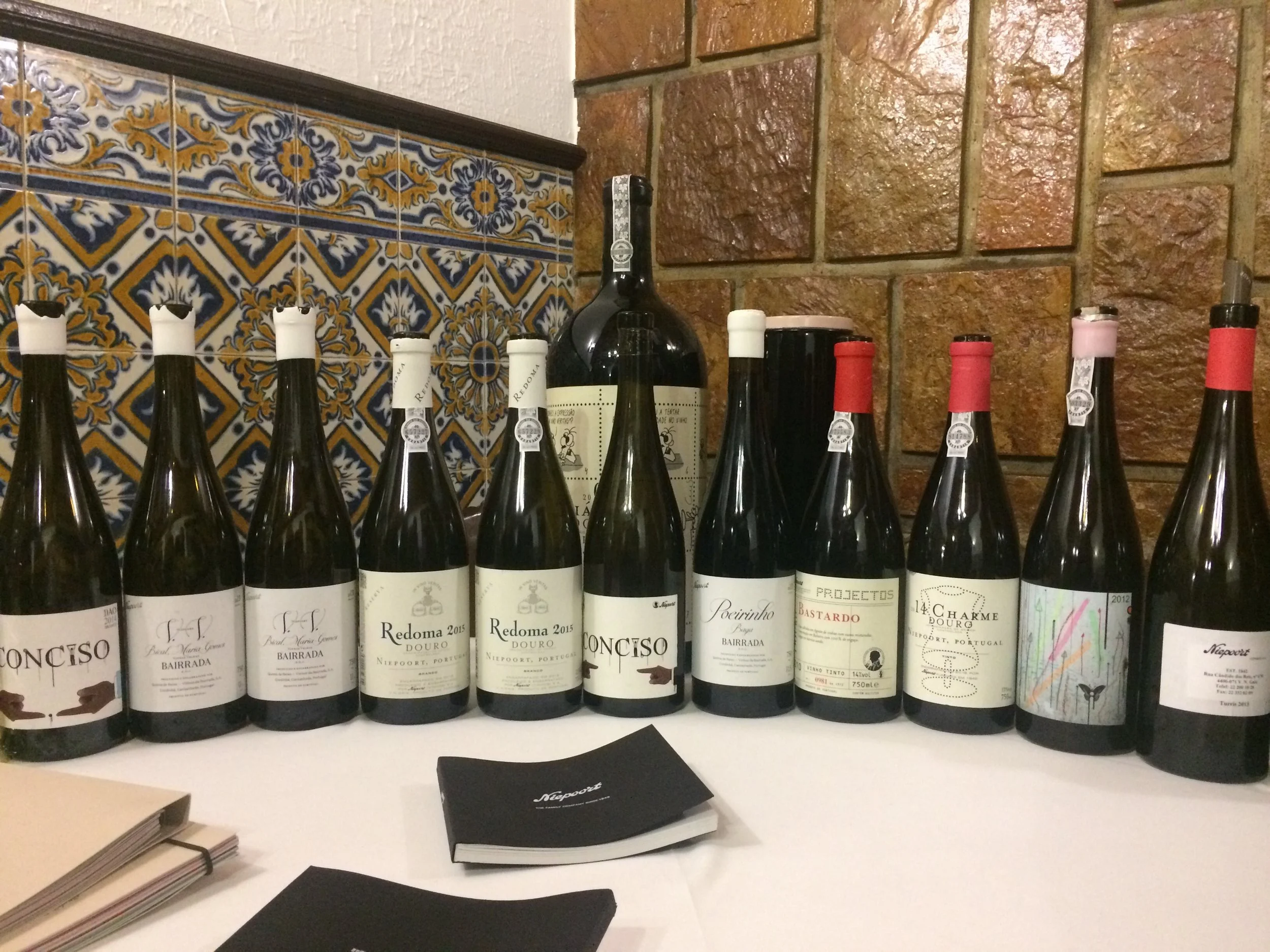
DOURO. Part 1. / Niepoort Vinhos.
O GAVETO / NIEPOORT VINHOS / CHRISTOPHER SEALY
NIEPOORT Vinhos - A NIGHT IN PORTO
Dinner at the restaurant O'GAVETO. Notes from a Trip November 2016
Looking at our schedule of wine makers, winery visits and dinners, I was excited that I would have the opportunity to revisit some producers I had already met on previous occasions. This third time would allow me the opportunity to truly synthesize and close 'a' chapter on what these wineries meant for Portugal. Of course there were a few producers I had never heard of and of course there was several among the few that I was very excited finally get the real low down. One of these producers was Niepoort Vinhos.. Niepoort, doesn't sound very Portuguese does it. Hear me out, Niepoort sounds un-Portuguese, only in name. Dirk Niepoort is a winemaker and an innovator that has pushed the envelope and the creative potential of the wines of Douro and the Wines of Portugal. Now let the record stand...Dirk Niepoort, the current winemaker for the Niepoort house, is the 5th generation of wine makers, the house has been family run since 1842, and have employed 5 generations of the Noguiera Family of Master Blenders over the last 50years. Everything about this house is #tradition but with a contemporary profile and flavour of the wines...! Though in the same breath I have to say that the wines are very Portuguese. So much that they stretch the imagination as far as the grapes will allow.
Sitting at dinner with Paulo Silva (Sales and Marketing) and José Teles (General Manager) I was in for a truly immersive dinner and tasting at a world famous seafood restaurant O Gaveto, in Porto.
First a word on the restaurant O Gaveto...the quality of fish and seafood here is managed by two brothers Joâo and José Pinheiro. Located in one of the biggest and most important fishing ports, the Matosinhos which is also happens to be a suburb of the greater city of Porto. The Pinheiro family has been serving up the freshest fish since 1984 and with some of the fish coming from a proprietary farm that the family operates ensuring consistency and quality. This is the first choice restaurant of any Douro wine producer and should not be missed if you visit the lovely city of Porto. As a child of West Indian parents, I've had the luxury of tasting the freshest fish of the Caribbean at home in Canada and at the source in Barbados...direct from the sea. As well one of my earliest wine trips took me to Santorini and a night of dining on fish literally plucked from a holding container in the sea at table side, I can say that O'Gaveto might have eclipsed all of my previous experiences with fresh seafood.
As I sit here writing and thinking, I ask myself how can I get straight to the point about this tasting and dinner, without the writerly flourishes that one might expect and flourishes that I am barely capable of achieving. I will attempt to revisit the tasting, and dinner as I have in my notes.
Dirk Niepoort is a man of ideas, In 1987 he started to make table wines in the Douro and wanted to exploit the potential and the synergy of Table Wines in Portugal. In 2002 he joined the group Douro Boys, which included Val de Meâo, Vale de Maria amongst a few, that intended to market and push the boundaries and more importantly the perceptions of what Douro table wines would be...call them the Barolo Boys of Portugal...modern, avant-gardiste, breakers of tradition but the guardians of heritage. Later in 2012 he would expand his horizons by joining the Baga Friends of Bairrada. Baga Friends - a group of like minded friends and associates looking to improve on the grape Baga. Baga a noble and fierce grape making wines that have been compared to Barolo and also has the capacity to make traditional sparkling wines not unlike that of Pinot Noir in France.
Niepoort is a collaborator, a protagonist and an artist.
“Niepoort is an artist, not thinking of the ‘consumer’ and he does what he believes. ”
He now makes wine in other regions of Portugal, in particular the Dão and Vinho Verde. The Vinho Verde would be the first wine of the night as we were served our first course of dinner.
Teppo Peixe Branco 2016 Vinho Verde. Niepoort Vinhos.
The wine is from an estate purchased in 2015, this vintage is a combination of the grapes Avesso, Trajaduro, and Azal from a vineyard- Quinta de Val Boa located in the subregion of Basto in Vinho Verde. The wine opens with bright green apple, and slight underripe pear with lemon zest. The wine has a gentle spritz, call it effervesence, which is not too distracting, supporting some soft creamy tropical white fruit flavour. A crisp and pleasant wine as an aperitif.

José and Teppo Peixe at O Gaveto. Christopher Sealy
Conciso Branco 2014, Dão. Niepoort Vinhos
The label for this bottle is one of the most compelling I have seen in a while. The artist is João Noutel , like the wines of Niepoort, the labels are conceptual and quite stunning as contemporary art pieces. He has collaborated with other wineries, a few mentored by Dirk. What I did notice about the label and something I have never seen on any wine label...PERIOD, was that the hand on the wine label was that of a black man, in a suit. I thought the hand of Barack Obama, of course, as this trip was on the eve of the US Presidential Election last November.
The vineyards for this wine are located at 600-800metres above seal level, comprised of old vines Bical and Encruzado. Fermentation for this wine was in traditonal granite lagares and malolactic fermentation was completed in barrel. Initial impressions on this wine was of lovely brioche like aroma with apple, sweet peaches, lemon and lemon curds. A wine in its youth the palate continued with nice oak integration and a rich palate dominated by bright acidity - a vinous combination of apple, white peach and pastry notes.

Conciso. Niepoort Vinhos. Christopher Sealy
This was not the first experience with a Dão wine from the hand of Niepoort. My first experience with his wines were with DODA. I proceeded to ask our hosts about this wine.
DoDa / (Do)uro and (Da)o. Niepoort Vinhos.
The concept was suggested by Dirks' father, Rolf, to create the best wine in Portugal by combining the elegance and longevity of the Dao wines and the power and structure of the Douro in one wine. The collaboration would work best with his equal, the wine maker Alvaro de Castro from Quinta de Pellada in the Dão. de Castro himself a master of winemaking in the Dao. The original blend was 50/50 of each wines...being made at their respective Quinta and then blended at Niepoort in Douro. The original name as I was told was DADO, but they had to change the name, at the same time the wine falls out of any appellation law and is simply and beautiful concept wine. Currently the 2011 vintage is available in our Ontario market from Terroir Imports. The wine is killer!
Bical + Maria Gomes Old Vines 2013, Bairrada. Niepoort Vinhos.
This is a gem of a wine, coming in at a whopping 11% alcohol from 60 to 100 year old vines on limestone soil from the coastal region of Bairrada. The elevated acidity in these grapes allows for full fermentation and malolactic to occur in 50 - 100 year old black barrels, originally from the Mosel, Germany. Try to imagine sucking on a well chiselled diamond!
This wine is laced with layers of mineral, mineral and more mineral tones, with slight green notes of green garden herbs: celery, parsley and savoury. The nose is rather quiet in regards to fruit, though I think with time this wine will evolve towards bright and gentle white floral notes, with lean citrus undertones.... I mean this wine is so pure and clean it was difficult to find the upfront pleasure of drinking it in it's youth. Personally, I would study this wine and with time re-visit and intellectually enjoy it's evolution.
I had to ask José and Paulo about this wine and they both attested that Dirk is someone who 'learns by doing and he respects the terroir, the grapes and the identity of the wines. His collaborations with wine makers such as Telmo Rodriques of Spain, Raul Perez and other have informed his beliefs on the benefits of balance and low alcohol in wines'.
Both admit that it is quite possible that Dirk's wines are 10 years ahead of their time. All of the vineyards are currently converting to biodynamic viticulture, the concept of 'less is more' holds true is an underlying theme to the Niepoort wines.

Bical / Maria Gomes. Niepoort Vinhos. by Christopher Sealy
Redoma 2015, Douro. Niepoort Vinhos.
This wine is sourced from an 85 year old vineyard at 600-800 metres above sea level on schist and granite soils in the Cima Corgo. A classic field blend primarily composed of Rabigato, Codéga di Lorinho, Viosinho amongst the few. Here is a wine of upfront pleasure and richness from the floral and bright fruit of lemon, peach and apple with distinct mineral highlights. The must is fermented in oak with 8 months of ageing and the wine still remains as fresh as apples and summer peaches. If you thought that elegance could not be found in the Douro, then you should try this wine.
Charme 2014, Douro. Niepoort Vinhos.
Charme is made in one of the historical Port Wine Quinta in the Niepoort portfolio of properties, the Vale de Mendiz. The grapes, mainly a field blend dominated by Tinta Roriz, Touriga Franca and others, are whole bunch foot trodden in classic 'lagares', with 3 days of maceration with fermentation commencing and then completed in barrel with further ageing of up to 18 months. Out of the bottle the wine leaps forth with pretty red floral notes, some wood spice moving to red apple, red cherry and field berry fruit. Overall the nose is subtle and complex moving to a palate that is gentle with fine grained tannin wrapped in a halo of spiced and slightly candied fruit of currant, strawberry and raspberry flavours.
Rumour has it that the name 'Charme' is a play on words with Charmes-Chambertin of Burgundy. Taste the wine and see for yourself!
PROJECTOS
Recently the Niepoort house launched the Projectos Series of wines. The Projectos vision manifests itself as limited edition of wines focused on regions and grapes of Portugal that are unique and of interest and/or are made in partnership with other like minded wine makers from within Portugal or abroad. The Projectos include the Conciso Branco and Tinto of Dao , Poerinho of Barirarda and Turris an old vine Quinta in the Douro.
“Projectos Series aims to express the different identities in each region. ”

Charme and Bastardo- my favourite companions of the night. Niepoort Vinhos. by Christopher Sealy
Bastardo 2010, Douro. Niepoort Vinhos.
The grape Bastardo was relegated to the sidelines of Douro wine production because of it's inability to produce wines of colour and weight, it lacked the power to contribute to port wine blending. The Bastardo grape is related to Trousseau of the Jura in France. What Niepoort has been able to do is fashion a wine of brigthness and a légèreté of bright red cherry, with herbal and savoury notes. A nice salinity runs through the wine which is rather tart and soft in tannin.
Conciso Tinto 2013, Dão. Niepoort Vinhos.
Another killer, label on this wine, a blend of old bush vines Baga, Jaen, Alfrocheiro and a touch of Touriga Nacional from a very ancient vineyard in the Dão. Like Voltron the wine is Part de-stemmed plus whole bunches, with the fermentation in granite lagares followed by barrel ageing and we have before us a wine of elegance and beauty. Tart red and blue fruit, with a wild mint to cola scented aroma laced with black pepper spice. The palate has earthy and gritty tannin, with more of the same fruit with light vegetal/herbal tones. This wine is beyond complex it is compelling.


Baga 'Poeirinho' 2014, Bairrada. Niepoort Vinhos.
An unfined and unfiltered wine, a palate of black plum and black cherry, with fresh dark green savoury notes. From a cool vintage the wine is tart and bright with a cool and lean profile.
Baga 'Poeirinho' 2013, Bairrada. Niepoort Vinhos.
This vintage shows a touch more warmth than the 2014, with black plum, cherry over botanical flavours of cola and root, with gentle tannin and an earthy profile.
Turris 2013, Douro. Niepoort Vinhos.
From a 130 year old single vineyard, dominated by the grape Touriga Franca, the wine is otherwise a field blend, that offers up a wine that is fresh and lifted, with dark berry fruit, floral hints, and warm spiced tone on the nose. The palate offers pure and driven flavours of ripe dark berries, plush and pleasant with a tartness to balance and easy tannin to keep the wine pleasurable.
The Finish.
Well, you can imagine how fun and engaging dinner was. We finished the meal with a 1997 Colheita Port, which was the best way to finish this engagement. I was thrilled. José and Paulo were very charismatic hosts, the food was amazing, the wines were fantastic! It was an honest and meaningful encounter with wine.

A fantastic lineup José Mourinho would be proud.
To find out more about the Niepoort Vinhos you can go to their website or download an app they have developed...yes The Niepoort Vinhos. App.
Some of the wines form Niepoort Vinhos are imported to Toronto by Bernard Stramwasser of Le Sommelier Wines
Somewhere in Between
Love from the Ghetto is different than love from fresh meadows.
(Talb Kweli & Hi-Teck/Train of Thought)

Au Natural
Friday tasting - a selection of really chill and delightful wines from Elena Fauci of Faro, Sicily. Italy. and some well made natural wines from Sarnin-Berrux
keep it real and tasty!

Why do you ask?
Waking up from a dream that was never mine.
Waking into a world that is not of my design

CAPEZZANA of CARMIGNANO, TUSCANY : HISTORY AND HERITAGE
CAPEZZANA of CONTE CONTINI BONACOSSI
SPRING TASTINGS this year ran frequently and with great intensity. It seemed like every body was in town showing their wares and wines from every part of the globe. It was a real task to fit them all in, especially if the wine maker had taken time to make the trip to the North American market. One of the many highlights was a visit from Daniel Edwards, the sales and marketing co-ordinator for the house of Capezzana. Daniel, formerly of the hotel and restaurant industry in his native England, found himself vacationing in a house next to the family estate of Carmignano Tuscany and the rest is history.
I encountered the wines of Capezzana when the entry level Barco Reale wine was in the LCBO vintages, some 6-7years ago. Barco Reale is for all intents and purposes the original and first 'DOC' of Italy, and is arguably one the first appellation that applied the use of the Cabernet grape then called Cabernet Francesi, as a required component to the Sangiovese based wines of the zone. As a student of Italian wines I was much intrigued, I had done my readings on the wines and today was a great opportunity to taste and talk about the wines of the famed winery. Note that the estate was once part of the historic and noble family Medici of Tuscany
BARCO REALE a 300 year history of wine.
History has it that the Grand Duke Cosimo III of the Medici (17th century) created the 'BANDO' a decree that declared the estate of Barco Reale as a wine zone of utmost quality. The Barco being a 53 km long wall that encloses lands and forests which contain an historical hunting ground, the wineries and vineyards, farms, olive groves and a few small rivers and streams. Situated north of Florence and to the Northwest of the Chianti appellation. The Barco Reale was noted of having superior wines and the Bando ensured that future wine was to continue to be made in particular style and fashion and also traded at a certain value to the highest courts and the greatest tables in all of Europe.
The property today is vast and includes 12OO acres of land on which today you will find the historic Medici Villa, along with 120 farmsteads of different families farming 300 acres of vineyards and 600 acres dedicated to olive groves.
It was in the 1920's that the noble family headed by the Count Contini Bonacossi, acquired the property. The Bonacossi family have been and still are collectors of antique art and textiles from Italy and Spain. The purchase of the estate was both a strategic business move and that of passion. The first bottles under the Contini Bonacossi was in 1925, in a more classic Bordeaux shaped bottle like the one we know today, they abandoned the old style straw covered 'fiasco' which was de rigueur at the time. This wine was 80% Sangiovese, 20% Cabernet Sauvignon with 1 year in tonneau and 1 year in bottle. Fast forward to the 1970's, with Ugo Contini Bonacossi the 4th generation and we see the foundations for the wines that I would taste today. In 1979, Ugo purchased clippings of Cabernet and Merlot from Ch. Lafite in Bordeaux in order to establish another level of excellence in their wines
5 generations later and the current family members, Benedetta (wine maker), Vittorio (viticulturist), Filipo (olive oil production) and Bertrice (estate and sales manager) share the responsibility of guiding this family run estates towards consistant quality.
Now for the wines.

The Family Wines of Capezzna Conte Contini Bonacossi. Christopher Sealy
THE VILLA WINES:
The VILLA di Capezzana is the flagship wine for the Capezzana Estate, the original blend for the wine remains as it was since 1925 comprising of 80% Sangiovese, 20% Cabernet Sauvignon. The wine spends 1 year in tonneau and 1 year in bottle.
“Villa di Capezzana, as a wine is to demonstrate affordable quality with great ageing potential. ”
2013 Villa di Capezzana : the wine displays layers of earthy dark blue berry fruit and rich red berry fruit, with a nice floral note, bright and lifted giving way to a round and full palate and fine grained tannin. The fruit flavour is a medley of dark blue and red cherry that remains fresh and taut. Given some time the wine will show it's true colours and flavours.
2007 Villa di Capezzana : this vintaged wine has evolved to present the same lovely floral and earthy tones I found in the '13, though with dried yet bright blue and red fruit, now add mushroom and a nice herbal sage aroma. The palate is soft and textured with dusty tannin and a chocolate powder like finish.
TREFIANO VILLA ESTATE WINE
TREFIANO RISERVA wine was first produced in 1979, from a single plot on a 4 hectare vineyard located on the 'Trefiano' Villa estate, not far from the main 'Villa' property and vineyard. This is a 'handcrafted' wine of 80% Sangiovese with 10% each of Cabernet Sauvignon and Canaiolo, that spends 16 month in tonneaux and 1 year+ in bottle. This wine has principally been made for the family and the following generations to collect and age.

The delightful Treffiano Riserva - a Sangiovese/Cabernet/Canaiolo blend.
2012 Trefiano Riserva : is charming with rustic and pleasant bright fruit aroma and a floral nature. There is a certain complexity in this wine, that is understated, gentle and yet firm. The palate is seemingly sweet-ish with layers of orange blossom, some toffee and toasted coffee. It is a lovely and harmonious wine.
ALONG THE FURBA RIVER:
GHIAIE DELLA FURBA = the stones along the Furba River. This vineyard is located on a rather flat zone on the estate. In 1979 Vittorio and his father Ugo decided to establish a bonafide Bordeaux blend. The site and the feel of the vineyard was to emulate Bordeaux, the river, gravelly soil adjacent to a stream but of course in Tuscany. With original cuttings of Cabernet and Merlot from the famed Chateau Lafite, the wine today is a powerful combination of 50% Cabernet Sauvignon, 20% Merlot and 30% Syrah.
2012 Ghiaie della Furba is pure and floral, with plum candy fruit, spice and touch of vanilla and all the svelte elegance and richness of a luxury wine without the price tag. The palate is very direct with surprisingly lifted with mineral tones that support bigger flavours rich blue fruit coated with buttered chocolate, wood spice and a vibrant pepper spice that is contributed by the Syrah. The tannins are well defined and need some time to settle but the wine gives pleasure today and I can only imagine the future. This wine is fully biodynamic.

Daniel Edwards being interviewed by Jamie Drummond (goodfoodrevolution)
The final wine was the 2010 Vin Santo Riserva. A wine of true passion and dedication that is entirely made by the hand of Benedetta, the chief wine maker for the family estate. The wine is 90% Trebbiano and 10% Colombano Bianco. A delightful nectar that begins with a 3-6 month drying of the grapes on bamboo staves in a full terracotta stone chamber with windows. Benedetta by scent and feel will regulate humidity by opening and closing windows. When the grapes have lost nearly 80-90% of volume the grapes are pressed and turned to wine and then aged in 'caratelli', small wooden barrels made of chestnut, oak, and cherry. The barrels are stopped with concrete plugs and will remain this way for 6+ years. The DOC minimum is 5 years. Only 6000 btls are made each vintage and the resulting nectar is sweet and balanced with vibrant acidity, pale gold in colour with that classic caramelized almond and hazelnut flavours, add roasted peach and apricot with salted caramel.
These are the wines of Capezzana : Conte Contain Bonacossi. Some of the wines are already here, the 'Villa' is currently in vintages with the other wines to arrive in late September to early October. Contact Charles Baker at Cru Wine Merchants.
Christopher Sealy
SETÚBAL. / José Maria da Fonseca - A PORTUGUESE WINE DIARY
NOTES FROM A TRIP IN NOVEMBER 2016
It was soon time to leave the Alentejo and start the journey to the north of Portugal, though before going north there would be a visit to the house of José Maria da Fonseca. One of the longest standing wineries in all of Portugal and if it is not the first, it certainly is one of the very first wineries to export wines out of Portugal to International market.
Today the company has approximately 650 hectares under vine that can produce up to 6.9 million litres of wine. With 80% of their exports to Scandinavia, Canada, USA and Brazil and only 20% consumed domestically, da Fonseca is an example of a family run winery that has transformed itself into a well run company with deep roots in the Peninsula de Setúbal appellation. Under the wine guidance of Domingos Soares Franco, a graduate of the wine school at University of Davis in California, Domingos and da Fonseca are known as a leader in research, innovation and winery technology. On my first visit to Portugal in 2013 I had the opportunity to have lunch in the family garden with Domingos and his nephews. His nephews assist in the management of the company and it is their father António, whom I had lunch with on this recent visit, who is the CEO of the company.
Back in 2013 I had the opportunity to taste single bottling of over 15 different Portuguese grape varieties to better understand their character and what they each bring to the blending of wines. Yes the blending of wines is an art in which the best winemakers succeed at. A mastery in the Art of Blending is the key to consistent quality for the wines of Portugal, combined with innovation and improvements in the vineyard the potential is exciting. It is certainly the case for house of da Fonseca

2013 Tasting of Single Varietal Wines representing the Grapes of Portugal.
We engaged in a rather quick fire tasting before sitting to lunch. Below are my notes on the wines tasted.
2015 Perequita Branco. Sourced from the very first vineyard for the company, the Cova de Perequita. A blend of Verdelho, Viosinho, and Viognier. No oak, simply pure clean and fresh aroma of orchard fruit, pear with dried flowers. I would say that it was much less fruity and floral than I expected. This wine is direct, fresh and lean.
2015 Perequita Original. This wine is the original and first wine brand the first to be exported. Around 800,000 litres of this wine is made. Aged in 100 year old Mahogany barrels. Mahogany wood is preferred as it is neutral, and strong enough to be shaped into the barrel size the company prefers. The wine is a classic blend of Castelão, Trincadeira and Aragones blended producing an aroma of rather fresh ripe red berry, with gentle floral tones and on the palate moving to gentle tannin almost vegetal and earthy, leading into a soft mineral tone. The fruit on the palate is easy, fruit driven and tart. Good Value and Easy drinking.
2014 Perequita Reserva. The Reserve is a wine that was created roughly 10 years ago, the blue print is Castelão with Touriga Nacional and Touriga France. Vines are roughly 30-40 years old. This wine was made with sheer drinking pleasure in mind, it shares the same structure profile as the 'Original' Perequita, though we go deeper and richer with black berry fruit, seemingly sweeter fruit over layers of vanilla from French oak, and certainly a fuller bodied wine.

2014 'Domini', Tinto Douro. It was only in 1990 that da Fonseca purchased vineyards in the Douro and started making the 'Domini'. A blend of Touriga Nacional, Tinto Barroca, Touriga Frances and Tinto Roriz. I found this wine as I have with the other Douro I would taste on this trip, to be quite subtle in aroma and persistence. I feel that the wines need a lot of time, like the wines of Bordeaux. The palate seemed to reveal the future of this wine in aroma and palate evolution with dry dark berry fruit, some spice, and earthy tannin and texture. Almost like waiting outside of the club in the line that stretches around the corner, you can feel the bass and sound emanating through the walls, you know what to expect once you get inside the doors, but you still have to wait and be patient.
2014 José de Sousa Tinto Alentejano. The vineyards for this wine are in the heart of the Alentejo at a region called Requengos. The vineyards are cherished for their granitic soils, giving way to mineral and fresh wines despite the ripeness that vines can achieve in the heat of the growing season. So details on this wine, we stretch back to traditional methods with 10% of the wine raised in clay amphora with a grape blend of Grand Noir, Trincadeira and Aragonez. In the glass the wine displays ripe plum and berry aroma with violet floral perfume. Palate is rich and full ripe and baked dark fruit backed by firm tannin and crisp acidity. Despite all this the wine remains fresh and cool to the touch.

2010 'Alambre' Moscatel de Setúbal. Moscatel for me is by far the best value and one of the highest quality dessert wines out there. From a producer focused on quality and precision these wines never cease to please, even the most avid Sauterne or Tokaji connoisseur. Mind you that Moscatel is still very different. José Maria da Fonseca are specialist with Moscatel, the original Muscat of Alexandria. The Setubal displays an intense aroma of bergamot and orange, to rose petal and other floral tones, the palate remains light and elegant in its sweetness with balance. The wine is made from the free run juice from a first press and rests 5 yeas in very old oak barrel. Gentle yet sweet and one of the most balanced dessert wines I have come across.
We then sat down to lunch with António Sr. and we had a very lively conversation that ranged from politics, to world travel and to the history and future José Maria da Fonseca as a family run company.


Vouvray
Without exception Chenin Blanc, Vouvray and the wines of Domaine Huet have got to be some of my favourite wines. Over the last 4 years I've been privileged enough to purchase and pour these wines at George Restaurant and now at Alo. It's almost like I can't have a wine program without them. In fact it was some 10 plus years ago and with Chenin and the wines of Vouvray that I had my eurêka moment with regards to white wines. So special and so delicious.
The 2005 Le Mont Demi-Sec Vouvray now in house at Alo Restaurant along with some 2008 Clos du Bourg Moelleux!

One of my happy places!
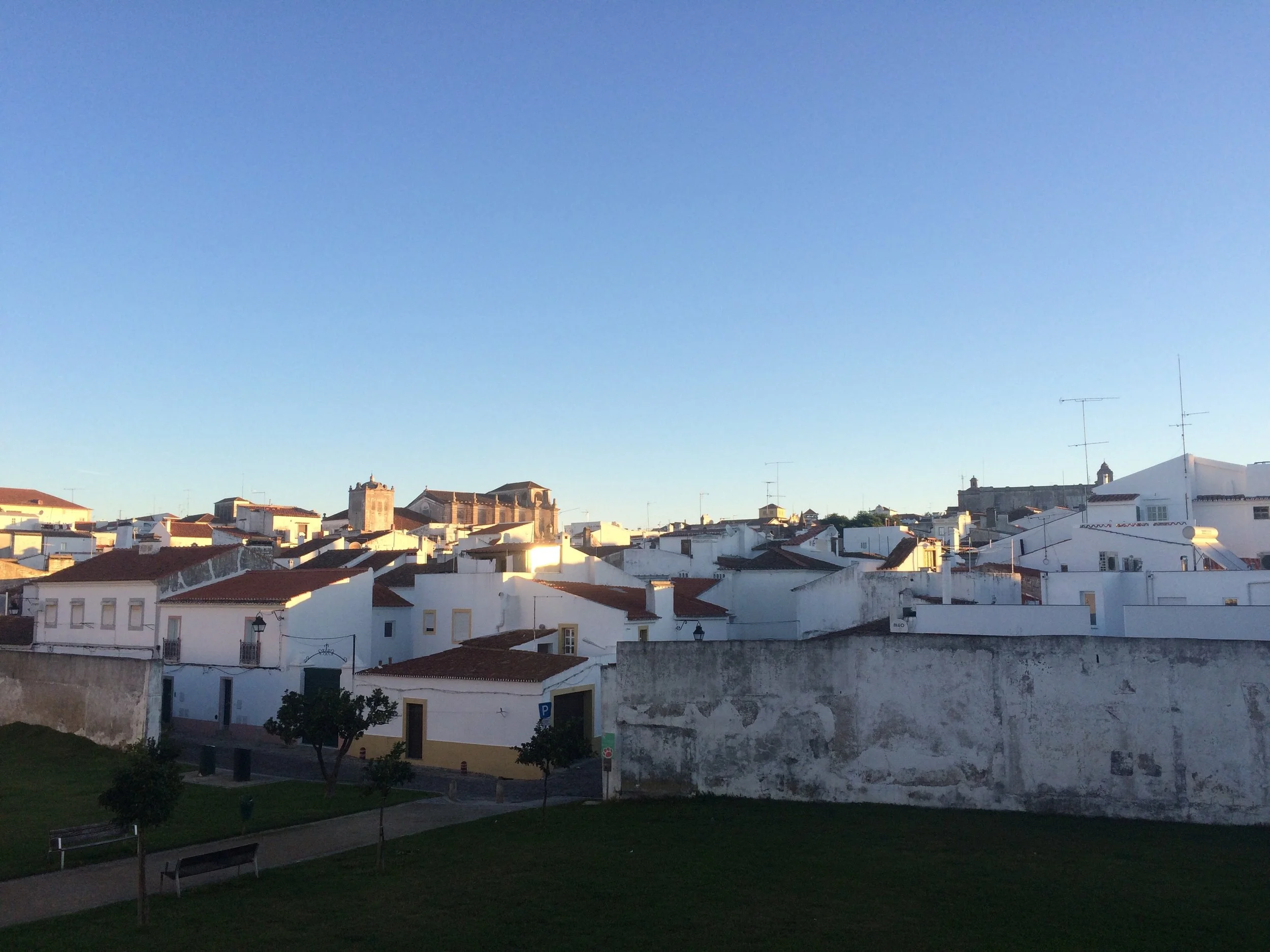
ALENTEJO Part 2. / João Portugal Ramos - MY PORTUGUESE WINE DIARY.
EVORA CITY AND AN EVENING WITH JOÃO PORTUGAL RAMOS - November 2016


We, I arrived in Évora City (a Unesco World Heritage City), late in the afternoon, there would be only a few hours left of sunshine before the chill of the night would begin it's slow creep. I took a walk through the quiet yet busy city. Then suddenly realizing in my instant transformation into a tourist, that this historical city was alive with its inhabitants going about their lives. Children and Teenagers coming home from school, the elders sitting and sipping coffee in the town square, and offices closing up as the restaurants and taverns prepared for evening service. Dinner was to be at 8 at the charming Luar de Janeiro Restaurant with the wines of João Portugal Ramos. It would be a very comfortable dinner and a casual tasting with the wines and the son of João Portugal Ramos, João Maria Portugal Ramos. (pictured below)

João Maria Portugal Ramos, son of João Portugal Ramos. photo by Christopher Sealy iPhone using VSCO.
THE WINES OF JOAO PORTUGAL RAMOS OF ESTREMOZ, ALENTEJO
2015 Alvarinho Vinho Verde : a very fresh and clean wine with classic characteristics of apple and pear with bright fruit and mineral elements on the palate. 20% of the wine is raised in barrel, giving a soft and pleasing dimension to the wine and not overpowering the lovely fruit makes Alvarinho so pleasant as an aperitif wine.
2015 Marquês de Borba White: this wine is composed of Arinto, Antâo Vaz and a touch of Viognier. What I can say about this wine is that aromatically the wine is quite direct in character, with lovely lemon, citrus and orchard fruit tone with a touch of sweet peach and pear due to the Viognier, only to be balanced by a very pleasing palate with nice acidity and a lemon and mineral sandwich of flavour. Well made.
2015 Marquês de Borba Red : this wine is lead by Alicante Bouchet, Aragonez with support from Trincadeira and Touriga Nacional. As an easy drinking red, with lovely dark berry, currant and a touch of cooked fruit on the nose, which then moves direclty to the palate with like and similar elements framed by freshness and gentle tannin. Freshness and pleasing fruit is the vital and necessary key to good Alentejo wines. A great everyday drinking wine.
2013 Vila Santa Reserva Red : Grape Varieties in this gem are Aragonez, Touriga Nacional, Syrah, Cabernet Sauvignon and Alicante Bouschet. Now a 1/3 component of this wine will be foot trodden in classic marble lagares with the remainder fermented in large wooden vats with ageing in American and French oak. The result is rich and ripe fruit aroma of dark berry, cassis and a perfume that is floral and fruity with a hint of sweet vanilla. On the palate there is the same velvety richness with a touch of rock rose, spice and vanilla from the elevage in barrel. By no way is this an obtuse 'big' wine. It balanced and elegant showing the skill and hand of the maker.
2014 Dourum Colheita Douro Red : here Touriga Franca leads the show with Touriga Nacional and Tinta Roriz. We dig deep into the richness that only the Douro can provide with ripe and sweet berry over toasted vanilla and a touch of grains de café torréfié - roasted coffee. I would say and conclude later in my trip that the wine, and others wines of the Douro, had a Bordeaux like elegance and density, but with lift and clarity of pleasing fruit that allowed the wine to be enjoyed in youth.
FACT FILE ON JOÃO PORTUGAL RAMOS
“The new generation (of young winemakers) can profit from the work of their parents. The big producers will maintain a consistency in quality and the small producers will add the diversity to an already growing market. ”
- João is known as one of, if not the most famous oenologist/ wine consultants in Portugal and is constantly engaged in projects throughout the country. The Dourum label of wines in particular is a partnership with João Maria Soares Franco the famous and important past winemaker of Barca Velha. Barca Velha is the Portuguese equivalent to Vega Sicilia in Spain or Stag's Leap in Napa.
- In the 1990's João himself, after an illustrious career of making wines for others, purchased a property in Estremoz, Alentejo to make his own wines and then soon become one of the largest privately owned family wineries in the south.
- Currently they have a team of 6 wine makers in the group overseeing projects in other regions of Portugal.
- João's son, João Maria has recently finished his Masters in Wine at the wine school of Montpellier and has studied at Bordeaux. He has been working with his father since 2014 and is part of the new vanguard of young wine makers in training.

A morning walk in the public gardens at the city of Évora.

The outer wall of the city of Évora
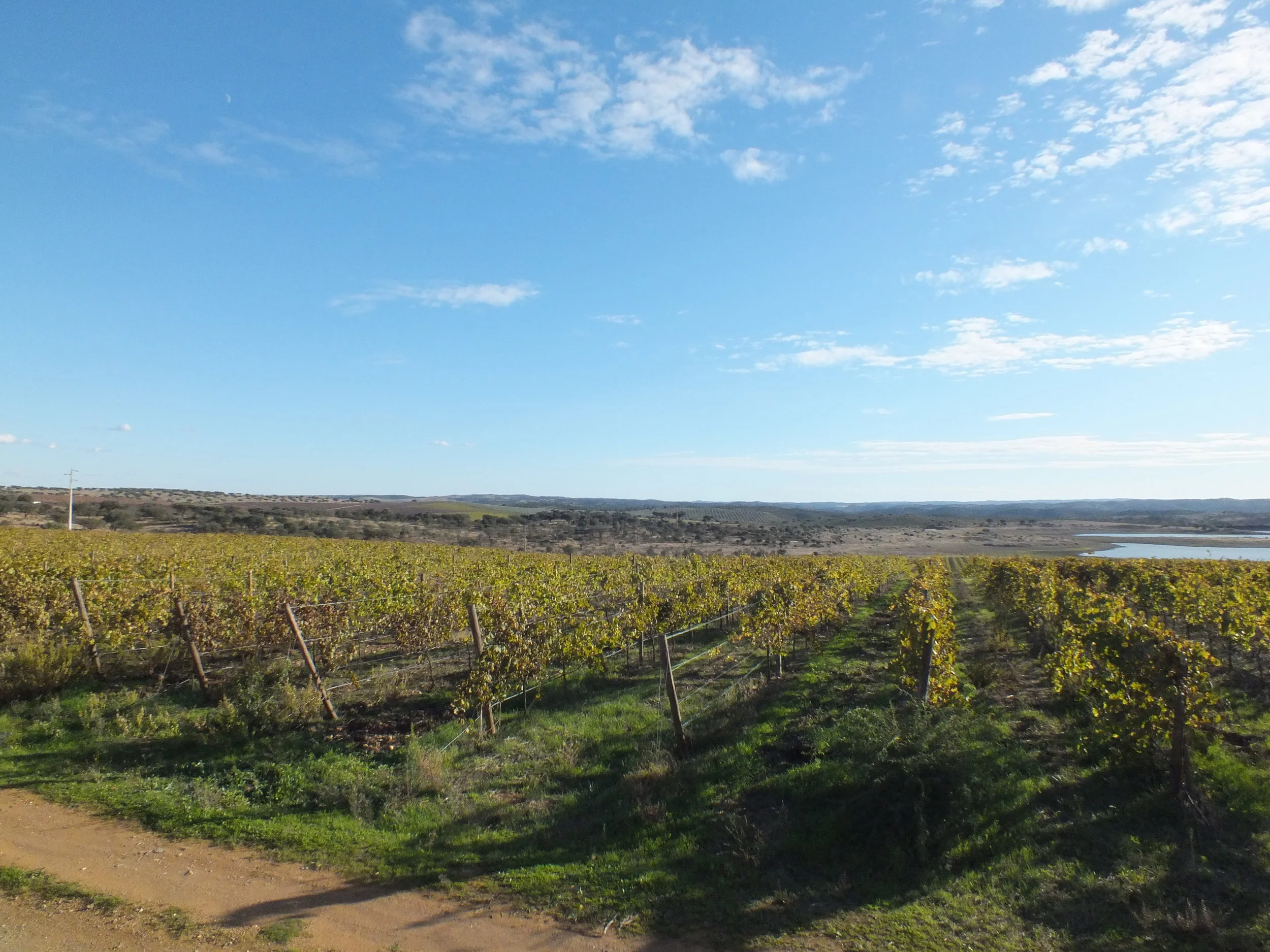
ALENTEJO / Herdade do Esporão - A PORTUGUESE WINE DIARY - Part 2
It is fall in Alentejo, the light of the morning sun is cool, vivid and blindingly bright. Causing one to squint as one looks over the horizon. A horizon divided by sky blue and the earth shades of olive green and vines.

Alentejo photo by Christopher Sealy

Alentejo at Esporão. photo by Christopher Sealy
We, I, am in Rueguengos a subregion of the Alentejo, not far from the historical city of Evora. The landscape is familiar, I've been here before, a few years back in time, exploring the wine regions of Vidiguera and to the far north Portalegre. It is beautiful here. Raw, earth, herbs, vines and sky for miles and miles. Today the 6 of us are visiting the Herdade do Esporão. Esporão is one of the pioneering wineries of the Alentejo, pioneers in the sense that the Herdade was a creative vision of the impresario José Roquette and Joaquim Bandeira. Roquette wanted to establish a 'chateau' in the Alentejo, a winery = Herdade, that would be known for quality. In 1972 the Esporão Tower and some 250 hectares of land were acquired. Yet there was still a significant hurdle to overcome as much of this area was occupied by farmers. Farmers who in a post dictatorship era were very much against the notion of surrendering land to raise vines, the idea was ludicrous. It was only in 1980's that a shift in mentality and direction was achieved, with a co-operative plan to rebuild vineyards and restore the land that the Herdade do Esporão project was now able to gather momentum. The vision included wine, olive groves and cork production. In 1985, the first winery was built, and it is here from which I gather my thoughts and memories.


Herdade do Esporão today produces about 15 million bottles of wine. Yes quite significant but key to understanding the potential and scale of what Alentejo and Portugal is capable of. The first brands to hit the market where the Esporão Reserve White and Red. The success of these wines was such that in the 1990's the company expanded into 3 tiers of production, which included the construction of 2 additional wineries. A second facility for white wines, a third for the top level wines and the expansion of the original home winery for the original reserve brands. The wines were present in 47 markets with 40% of consumption in Portugal and with the farmers included in the success grower contracts were re-established and Esporão was acclaimed a successful business model. The success is a combination of vision, quality and consistency which the Wines of Portugal needed in order to establish a foothold in the World Wine Market. You aren't going to find quirky, sommelier geek out wines here. You will find wines of benchmark production standards, precision that represent a necessary dimension of the Wines of Alentejo.

David Baverstock, Chief Wine Maker presiding over the tasting.

Sandra Alves, Wine Maker.

The core brands of Esporão. Each vintage the label of Esporão Reserve White and Red is commissioned to a noted Portuguese artist/painter. Here the work of Pedro A.H. Paixão
FACT FILE
- Herdade = large winery/farm
- Monte = small winery/farm
- Quinta (a term used in the north and primarily the Douro = the classic term for a winery that was obliged to surrender 1/5, a Quinta, of the production to the monarchy.
- Herdade do Esporão sources grapes from the entire Alentejo. Particularly from the high altitude north sub region of Portalegre down to Reguengos.
- 7 different soil types contribute to the complexity of the wines.
- Production is 70% Red wine and 30% White wine.
- Red Grapes farmed : Aragonês (aka Tempranillo, Tinto Roriz as it is called in the North), Touriga Nacional, Syrah, Cabernet Sauvignon and Trincadeira
- White Grapes farmed : Antão Vaz, Verdelho, Semillon (imported by David who happens to be Australian)
- David Baverstock, Chief Wine Maker has been with Esporão since 1982. He had come to Portugal to work with Symington's in the Douro in 1980. Prior that that he had spent time in France with LaPierre in Morgon, Beaujolais and some time in Germany.
IN THE TASTING ROOM
WHITEs
2015 Monte Velho White : a wine comprised of Antão Vaz, Roupeiro and Perrum offering up initial aromas of apple, pear with white orchard blossom perfume that borders on sweet yet remains bright and fresh. To taste the Branco it is rich yet tense, with green apple to dry peach and other stone fruit flavours. This is a wine with nice balance full and texture.
2015 Verdelho : at it's origin this Verdelho comes from the island of Madeira and it exists for the simple reason that the grape was isolated on the island during the era of the vine disease Phylloxera that devastated the mainland vineyards of Europe. At present we see more frequent use, though it is quite low yielding. It was in 2001 that Esporão started to plant the Verdelho. I would say that the wine is quite unique and interesting with an aromatic intensity that is of waxy green and gold apple, fresh pear combined with citrus moving to herbal light celery and anise like tones. On the palate the wine is quite dry, very dry with some clean and crisp apple, citrus and spiced flavours, think white pepper to jasmine. Quite direct and subtle in complexity.
2015 Esporão Reserve White : the blend here is mainly Antão Vaz, Roupeiro with Arinto and several other white varieties in the mix. The wine is fermented in 60% tank and 40% new oak with a further 6 months on fine lees. The resulting wine is full, with fruity citrus to white tropical fruit aroma over subtle wood spice and vanilla. I'm finding a familiar savoury and herbed aroma. The palate gives way to richer flavours on the palate, with a touch of texture. The wine is warm with big fruit and gentle spice with a pleasant finish.
REDs
2015 Monte Velho Red : to make the 5million bottles of this wine, 20 different farmers contribute to the blend of Aragonês, Trincadeira, Touriga Nacional and Syrah. The result is quite clear, with a simple wine of cherry and red berry aroma and flavour, the fruit is fresh and not jammy better yet it is bright and clean. A very easy going wine with little cosmetics and no fuss.
2013 Esporão Reserve Red : the perennial classic from the Herdade based on the grapes Aragonês, Trincadeira, Cabernet Sauvignon and Alicante Bouchet. This wine is a cuvée with each grape fermented separately in tank, blended then matured 12 month in barrel - some new and some used. Here we have rich fruit aroma, dark berry, black currant with spice re: saffron, vanilla, the nose remains fresh and does not move into the cooked fruit territory as one would think with the heat of Alentejo and the 'use' of barrel. The palate deepens with more dark blue and black fruit and gentle herbed tones. This wine is upfront and firm in tannin. A solid example of the craft at Esporão.
A few other wines that are of real interest which I enjoyed over lunch are pictured below.

The Trincadeira to which I never say never was vibrant and fresh / the Moreto is the Amphora raised wines from vessels dating back to 1848, a new project for Esporão / AB - Alicante Bouchet was a big full bodied pleasing wines, call it Grenache on steroids.


LISBON / Fita Preta Wines - A PORTUGUESE WINE DIARY - Part 1
NOVEMBER 6TH 2016
It was a moderately warm day as I got off the overnight flight from Toronto to Lisboa aka Lisbon. I flew on Açores Airlines, a flight that was efficient and direct as well as a throwback to circa 1986 a memory of the first time I ever flew on an 'aeroplane'. A time when overnight flights meant lights out, no movies, no room to stretch your knees and getting up to the washroom meant walking to the very very back of the plane. What the flight did afford me was the chance to sleep in-flight, for the very first time ever, which meant arriving in Lisbon with enough energy to walk and explore the city before dinner!
I was to be hosted by Andrea Guimarães of ViniPortugal on a wine tour of Portugal. A number of us would arrive in Lisbon to explore Alentejo and Setubal then move north to Porto and the Douro and Vinho Verde regions. The group would be 6 in total, 3 from Toronto and 3 from Montreal. My Toronto colleagues, Josh Correa of Archive and Alessandro Pietropaolo of Bar Isabel, had arrived 4 days earlier to enjoy the many food and wine delights of Lisbon and I would later catch up with them for an apero before going to dinner. I did have the luck of meeting 2 of the 3 Montreal companions whilst waiting for our transfer to the hotel. We had been on the same flight but had not met until now. They were Simone Chévalot of famed Montreal wine bar called La Buvette chez Simone and more recently Furco and Parvis and Sommelier Philippe Boisvert of Le Club Chasse et Pêche and the recently opened Le Serpent. Our Journalist for the trip Patrick Désy from Le Journal de Montréal would join us at dinner. So with a couple of hours to spare I set off with my two new French Friends in Wine, Simone and Philippe for a walk of Lisbon.


DINNER WITH ANTONIO MAÇANITA AND HIS WINES FROM AÇORES AND ALENTEJO
That evening we would dine with winemaker Antonio Maçanita of Fita Preta (Alentejo) at the restaurant Cantina do Avillez-Lisbon, a casual dining environment created by Michelin starred chef José Avillez. Antonio Macanita is considered as one of the best wine makers of his current generation with projects in Alentejo, Açores and most recently in the Douro. His projects embrace the history of viticulture and grapes of each region. It should be noted that Antonio is very much linked to each region by family relations, his father is from the Açores, his mother is from Alentejo and his sister recently joined forces to start a winery in the Douro. Antonio is of the new generation of makers that push towards precise and clean wines, with loads of character, in a era when the wines of Portugal are appearing more frequently on the wine lists of the many fine restaurant establishments in North America. I had the opportunity of meeting Antonio on a visit to Toronto last winter and he is very much an energetic and enthusiastic character. His wines reflect his personality. On this second meeting on his home turf in Lisbon, he was even more jovial as we had grand tasting of his wines with dinner and then proceeded to visit some of his favourite wine bars post dinner and late into the night. He was assisted by his right hand man David Marques and we began an epic first night of tasting.
THE AÇOREAN WINES OF THE AZORES WINE COMPANY by ANTONIO MAÇANITA : the Rare Grapes Series
The two main projects on offer at the moment are the Fita Preta wines of Alentejo and the Azores Wine Company of Pico Island, Açores. We started the tasting with the Azores Wines and appropriately with the 2014 and 2013 Arinto dos Açores. Arinto being a lovely and engaging white grape, this a particular clone indigenous to the Açores. The mainland Arinto is a different clone all together. I currently list the 2013 at alo Restaurant in Toronto, so it was a treat to have the 2014 side by side.
2014 Arinto dos Açores DO Pico : clean and crisp with intense and zesty lemon, apple and subtle floral notes over a briny and salt tartness with a gently herb note. This wine was still very young and taught.
2013 Arinto dos Açores DO Pico : apple to lemons and bright bitter citrus aroma with a pronounced florality. There are subtle lactic and creamy notes indicative of the lees work in the wine but certainly pronounced and evolved after a few years in bottle. The palate translates to golden and green apple balanced with tart acidity.
2014 Arinto dos Açores 'Sure Lie' DO Pico : This wine was composed of like elements from the previous Arinto but now with a complexity that was deeper and decidedly more focused. The apple and floral to chamomile tones are pure, quiet, yet persistent, with a lovely backbone of acid flanked by a crisp mineral flavours of orchard and citrus, and also combined with a touch of 'salt' and brine, all was in balance. In two words this wine was focused and pure.


2010 Terrantez de Pico IG Açores from the Sao Miguel Vineyard site.
Terrantez is an indigenous white variety which is a crossing between Verdelho and Bastardo. Originally planted from a massal selected vineyard, Antonio and his team are in the midst of recovering 47 hectares of the grape for which 27 hectares are currently farmed. As per the tasting of this wine, it was waxy, lemon and lime to green apple on the nose with a fresh butter tone. The palate gave way to a pleasant earthiness layered with sweet apple and pear, viscous round and rich.
2015 Terrantez de Pico IG Açores : The recent vintage of this wine was a clean and lean contrast to the evolved 2010. It was bright and bitter citrus on the nose with the briny to saline aroma. The palate was a mirror image of the nose with added layers of fresh citrus with savory herbal aroma. A profile I find quite often with maritime/mediterranean wines with high acid structure and tone. Only after a couple of hours do the hard edges soften to a smooth if not creamy citrus palate.
There are two Red wines from the Açores that Antonio also included in the tasting. Both of which have been available in Toronto through the agent Le Sommelier by Bernard Stramwasser. I have worked with both wines and have actually cellared one in particular for about 7 months now. That wine is the 2014 Isabella ai Proibida and will introduce it on our wine pairing menu in the coming days/weeks.
2015 Isabella a Proibida is indeed the name of the red grape involved in this wine, a Vinho di Chiero ( a scented wine) which I am quite taken to. It is a grape that is actually not fully recognized and permitted to make quality wine hence the scribble over Isabella (the forbidden) in the photo slide above. The aroma is of ripe and rich plum and currant but not jammed or wooded, with floral and pretty highlights supported by a gentle smokey herbal tint. To taste the wine dials all that back to hit you with lean and bright acid structure with some reference to toffee and toasted coffee, though only 20% of the wine sees oak on this wine. Insert garden herb and savouries. Overall an elegant and evolved wine. A highlight of the tasting and as I have recently revisited the 2014 this wine has a lot of promise for the Açores concept of Antonio's vision and wine program.
2015 Tinto Vulcanico IG a blend of unknown indigenous varieties. At this time of the tasting we were knee deep in wine and food and it was hard to get over the din of the busy and boisterous restaurant. Nonetheless my tasting notes continue with this fresh and ripe berry red with some tobacco, toasted coffee bean, then a herbal savoury edge. The palate could be considered 'brash' for the lack of sweet or pleasurable fruit. The wine overall was tart fresh, herbal and certainly a 'sensorial experience'.
THE ALENTEJANO WINES OF FITA PRETA Vinhos
The next series of wines takes us to Alentejo with the wines from the Fita Preta Vinhos. A project that began in 2004 with his then partner David Booth (1965-2012). Antonio's philosophy with all of his wines is to 'embrace history, knowing full well that one is in the present and needing to move forward, but not without understanding the past'
NOTE: all wines fall under the denomination of Vinho Regional Alentejano
BRANCO / WHITE
2015 Branca de Telha : is the amphora raised white wine made from the grapes of Roupeiro and Antâo Vaz. The grapes are whole bunch pressed, then filtered into 1000litre amphora, fermentation begins, and the wine continues in amphora for 28 days before being moved to stainless steel tanks. This process offers up a wine of floral to waxy fruit and earthy complexity on the nose, primarily peach and apple aroma of a semi-aromatic intensity giving way to a palate of waxy green and russet apple, with a touch of sweet stone fruit. I would call it a very approachable and user friendly amphora wine, not funky but fun enough as a primer.
2015 Fita Preta White : a combination of Antâo Vaz, Roupeiro and Arinto producing a rich and plush white wine. A wine displaying aroma of lemon and orange accented by white flowers. The palate is defined by a bright citrus, with pleasant mouthfeel and texture, almost a slight hint of tannin for a white wine that is entirely void of oak. A fun and sexy wine of good complexity.
2015 Palpite Branco : The term Palpite stems from Portuguese expression for a 'hunch' or a gut feeling, which is applied to the best grapes from separate blocks of Arinto, Antâo Vaz that will be chosen for this top wine. The red carpet treatment for this wine is 100% barrel ferment and ageing with battonage. The 2015 version of Palpite was initiated with a combination of controlled yeast and some natural, in 1/3 new oak with more than 1 year in barrel before bottling and future release. The hunch I get is that this wine offers the 'big' white wine drinker the opportunity to experience Portugal in a 'flavour comfort moment' with a unique and different set of varieties from the Portuguese south, that isn't chardonnay. in fact I don't think I've ever had a Chardonnay from Portugal! The 2015 Branco is rich, with honeyed apple, with of course the classic vanilla like aroma that only oak provides, though a combination of peach and apricot pastry flavours is very pleasing. This wine needs time for all that power to come into balance. Otherwise it is a well made wine, though not my style.
TINTO / RED
2014 Fita Preta Red : a combination of Aragonez (aka Tempranillo, aka Tinto Roriz), plus Trincadeira, and Alicante Bouschet presented as the classic wine for the Fita Preta brand. Initial aroma of black and blue fruit, with ripe currant, moving to mineral toned yet modern floral and rich vanilla tones. Almost Christmas candy like with orange rind and dark cherry though remaining fresh. The palate offers up ripe black and blue fruit, nice toasted vanilla and coffee with a tell tale streak of acidity produced by the vibrant grape Trincadeira. Chill!
2015 Touriga vai Nua : a conceptual expression of Touriga Nacional with no oak influence at all. Touriga 'Nude'. The wine is fleshy and bright with red berry to apple skin - breakdown to strawberry and cotton candy, with sweet coffee cream. The palate continues this theme with lean fresh and tart structure that skips to some plum and rich red fruit and then switches back to orange, bergamot and white pepper. As you can read by the notes the pleasure factor is high on this wine and would satisfy a wide spectrum of wine lovers.
2014 Tinto Castellão : now, Castellâo is a red grape primarily found in the Setubal and Tejo regions. Castellâo has been used to make light and fresh wines though it can be made into a full bodied and age worthy red. A close comparison might be the way the new world public looks at Merlot?!? So what Fita Preta has produces is a wine of pleasure with candy raspberry and bramble fruit dominating, with a little smoked hickory, coconut and vanilla added. It would classify this as a light to medium bodied wine with savoury notes and sour cherry and raspberry on the palate. The wine is made with 30 days of maceration / 12 month in barrel / 12 month in bottle. So yes, Antonio is taking his time to make a precise expression of this once thought of as a simple grape Castellão.
2014 Palpite Tinto : consists of the mighty Aragonez, Alicante Bouchet and Touriga Nacional. This wine aromatically is all black cherry and rich red berry fruit, layered with rich and full aroma of vanilla and spice. The beauty of full bodied reds from Alentejo when done right is that instead of going jam- jammy, the wines kick in with some great structure and acid, call it freshness. This wine will hit all the pleasure spots flavour-wise with rich ripe fruit, dark red and forest berry then slap you in the face with some food friendly acid to balance everything out. This wine is certainly the Rolls Royce of the portfolio.
Yes and that was not all we tasted that evening, though I do feel that sums up the key elements of the Antonio Maçanita Azores/Fita Preta arsenal of wines. Dinner and tasting with this energetic personality was certainly the best way to break the ice on what would be my third tour of Portugal.
NEXT: ALENTEJO - A PORTUGUESE WINE DIARY - PART 2 WILL TAKE ME INTO THE HEART OF ALENTEJO WITH THE WINES OF ESPORÃO AND JOÃO PORTUGAL RAMOS.


GILVESY - Rhine Riesling with Robert Gilvesy - HUNGARY
It's not often one gets to taste Hungarian wines, though we in Toronto have had the chance at least once a year for the last 4 years. It does help when the wine maker is Robert Gilvesy of Hungarian birth, he after establishing roots in Canada, returned to his homeland of Hungary to build his winery 'Gilvesy Pincészet'. The winery is located on the vast plains of a greater wine region called the 'Highlands' the appellation is called 'Badacsony' direclty located on the north shore of Lake Balaton in South-East Hungary. The subregion and the multiple vineyards specific location is identified as Szent György-Hegy.
Robert was in town late August for an annual visit to family to meet up with agent Nicholas Pearce of NP Wines. They arranged a small tasting at the current hot spot for informative yet informal wine tastings Archive 909.
My recent trips to Austria last summer and more recently participation in the Vienna- VieVinum wine fair has certainly conditioned my palette in what to expect from Eastern European wines. The wines are well crafted and certainly fit for our dining tables and wine bars. Here are my notes.

Robert Gilvesy and his wines of Lake Balaton, Hungary
Robert works primarily with white grape varieties, those being Riesling Italico, Pinot Gris, Rhine Riesling, Sauvignon Blanc and more recently Furmint. It is interesting to note that the soil in this region is primarily volcanic with tufa and sandy loam, giving way to great freshness and mineral tones throughout all wines.
The entry level wines that he presented were:
Bohém Riesling Cuvée 2015. The Bohém is a cuvée of Riesling Italico, Rhine Riesling with a dash of Pinot Gris for good measure. The wine is fresh, clean and lean as one would expect. Continuing with nice tart and sweet orchard fruit, think green apple, apple skin, and citrus. Overall the wine is nicely concentrated and balanced as an easy and gently way to introduce a drinker to the world of Hungarian wines.
Kaçer Rhine Riesling 2015. Here we jump to 100% Rhine Riesling presented with a pure aroma of apple, pear, and a touch of pine layered with an essential oil of mountain flowers. This wine had a more subtle and complex nose with some creamy notes indicating work with lees. Now moving to the palate the Kaçer is off dry but dry in that fantastic Riesling way, with a gentle weight and nice viscous mouth feel with a fresh apple and pear nectar flavour.

The following wines are labeled under the 'Gilvesy' brand banner for the 2nd and 3rd tier Rhine Riesling and his two (2) Sauvignon Blanc.
Rajnai Rizling (Rhine Riesling) 2015. This wine is made from primarily 45 years old vines and a small component of younger vines and if my notes are correct this wine sees 50% stainless steel ageing with 50% in 2-3year old Hungarian 500 litre barrel. As a tasting note the barrel elements on this wine are well integrated and very little is perceived in the nose and on the palate. The wine presents itself with lively lemon and lime to apple/orchard fruit aroma and flavour with a well rounded weight and mouthfeel. Acid is moderate with a gentle citrus pith bitterness. I would say a very complex wine for the price point at $19.95 and being the 2nd tier of the Rizling offerings. I would enjoy having this wine with food or on a tasting menu...
Tarányi Rajnai Rizling Reserve (single block barrel aged Rhine Riesling) 2015. Here we have complex aroma of stone fruit and citrus, from orange and candy lemon to slighty sweet fuzzy peach. This wine is many levels richer than the previous Rizling examples and is well textured on palate though it maintains the Riesling bright floral elements on the nose and gently on the palate.
Sauvignon Blanc 2015: The Sauvignon Blanc is made with 35 year old vines from the Mogyoros vineyard. This is a good and classic cool climate example of Sauvignon Blanc with gentle tones of grassy and green peppers aroma, with savoury herbed aroma, though bright with ripe citrus - lemon and lime. I would say a very pleasing wine.
Mogyoros Sauvignon Blanc 2015 (single block barrel aged) 2015: with classic sauvignon blanc aroma of lemon, lime, some tropical white fruit with spice one could denote some earth and mushroom. Certainly a richer and creamier textured wine, multilayered with nice acid and a salty, mineral finish.
Pröba Üzem Furmint 2015: This was the final wine of the tasting and it was certainly fun and interesting to taste. In the same breath it is floral and pretty layered over rich and creamed fruit notes with caramel and a touch of vanilla as the wine sees some barrel, though the palate remained fresh clean and interesting with lemon and orchard fruit dominating. Overall it was clean, acid was moderate and balanced.

Furmint and the Tarányi Rizling
VIETTI - TRADITION OF INNOVATION
PRIMA
It was not long ago that I knew absolutely nothing about Nebbiolo and the wines of Barolo e Barbaresco. As a matter of fact, I still know very little as I learn that there is so much to learn. I had read somewhere that Barolo was the King of wines and Barbaresco was the Queen. Wines with lasting depth like that of Aglianico in the south but with a more haunting finish than that of Brunello of Tuscany.
My first trip to Barolo was for a wine -trade event called Nebbiolo Prima, the vernissage of the years upcoming release to market of all wines Nebbiolo including Roero, Barbaresco and Barolo! My invitation was as a Sommelier/Buyer versus that of Media/Journalist. Choose your program was the initial email - vineyard visits, regional tours and choice of restaurants for the evening wine dinners. By the time I researched every single producer and restaurant for their worth, all options I wanted were booked. I was stuck with an initial tour of Roero…WoW!….It was great, it was amazing, what best way to warm up to the great wines of Piemonte than by tasting and learning about the gentle and playful wines of Roero.
I did manage to make but 3 rather crucial and important vineyard visits, really without knowing. The first was to Elvio Cogno in Novello. Walter (son-in-law and wine maker) and Nadia (daughter to Elvio) I had met a few years before and fell in love with their wines. The other 2 wineries were Bartelomeo Mascarello and Vietti. I really knew nothing about them, imagine! Well wasn't I a lucky bugger. 5 years later and 3 trips all in total - each time included a visit to Mascarello and Vietti. Recently I wrote a piece which included a few words about Mascarello (see www.goodfoodrevolution.com 'boy-oh-boy' Barolo) and I think now is an opportune time to share a few words about the house of Vietti and the current winemaker Luca Currado.
First I will reference Jamie Goode once again regarding an article about wine journalism and the subject of favouritism when writing and reviewing wines/wineries. Favouritism certainly and undoubtedly exists but what happens when you get to know the character of the wine and it's maker, after subsequent visits, research and tasting. I do find myself consistently noting that the wines of Vietti, like many others, stand out for their character and impact. Listen, I'm not talking about being the best wine, I'm talking about continually being a reference for erroir, technique and balance. Il est clair ce qu'on trouve tous qu'il faut dans tous les vins de Vietti!
Vietti represents innovation and tradition. I was in a trade seminar focusing on the region of Franciacorta hosted by Ricardo Curbastro and I will never forget him saying that 'a Tradition is the lasting result of an innovation that worked!'

My tasting notes from a session not long ago.
NO BERLUSCONI, NO CRU SINGLE VINEYARDS!
Real Talk! Circa 1961 - Luca's father Alfredo Currado, the patriarch for the current rendition of Vietti along with Beppi Colla, then of Prunotto, asked the question, 'wouldn't it be interesting and innovative to identify and bottle single vineyard expressions from the whole of Barolo'. Up until this point the rule of thumb was that Barolo was a cuvée or rather a blend of the best vineyards and the best of different areas into one wine. That was the true way to make a balanced wine. What one vineyard couldn't give another would provide, producing a uniform and coherent wine year in and year out. Every wine of Barolo would represent a portrait of the region painted by the hand of the wine maker. But what of vineyards that almost had it all. Alfredo wanted a closer look at the region, at the communes and why and how each hill produced a different wine. Alfredo wanted to find greater value, greater depth and character of Barolo, and this new way of thinking would prove to be a great way to differentiate his wines from the others.
How would he achieve this and which vineyard to define this idea? The vineyard would be the heart of the Vietti family, the Le Rocche Vineyards in the commune of Castiglione Falletto. This was going to be the Barolo equivalent to the Burgundy 'Grand Cru'. La Rocche is the most challenging vineyard to manage, with aspect and slope so steep that everything must be done by horse and by hand. It is a vineyard that is the most challenging to interpret, making wines that need time. The results are enchanting, distinct and pure Nebbiolo. The second vineyard would be Brunate in the commune of La Morra with wines that reveals its colours from the beginning with elegance, ripe fruit and 'softer' tannin.
The third would would be Lazzarito of the commune of Serralunga d'Alba. Lazzarito a bonafide 'grand cru' with wines tanninc, spiced and rich with depth of flavour like that of Southern Rhône.
50 years on and these 'cru' are pillars of the Vietti Family of wines. They represent the first single vineyard expressions of and for Barolo. At the time it was an innovation that today has resulted in a widespread and now accepted and necessary 'tradition' of producers presenting an 'ultimate cru' expression of their vineyards.
A FEW MORE WORDS ON VIETTI
This is not the end of it. If you have not already you must taste the single vineyard expression of their Barbera from both Asti and from Alba with some vines surpassing 85years of age. Now, If you choose to continue reading you will not find tasting notes, but background information on a few of the the Vietti wines.


ARNEIS OF ROERO
Luca Currado is the current character behind the the wines of Vietti, along with his wive Elena they make a formidable and jovial pair. He from a family of winemakers and she from a family of restaurateurs.
Another important wine in the family is the Arneis from their Santo Stafano vineyards in Roero. Arneis being a white variety.
Roero is more than just the 'other' appellation for quality wines of the region of Alba. We seldom see the wines in the Ontario market due to the dominion of Barolo and Barbaresco. Though I will say, that on my first visit to Piemonte a few years back I toured the region and I was so pleased and enchanted by the approachability yet complex nature of the wines. The relatively sandy soils, various elevations make for more perfumed and softer wines. Don't drink 'under-age young vine' Nebbiolo from the B&B (Barolo&Barbaresco), drink Roero for a truer elegant and 'ready to drink' expressions of the grape.
But I digress I want to speak of Arnies, the grape once called Nebbiolo Bianco, As it was the blending partner to Nebbiolo in Barolo wines to create a softer and more complex profile to the wines of B&B in much the same way Viognier is used with Syrah in the Northern Rhône. This practice is no longer. Today Arneis stands on it's own and it was thanks to Luca's father Alfredo - the father of Arneis. At a time when the wine world of Italy was planting Chardonnay. Alfredo said No! We need a white wine that is not Chardonnay, and as an indigenous grape variety with character and moderate ageing potential Vietti in 1968 re-planted the Arneis in Roero, and rescued the grape from extinction.
PERBACCO - LANGHE NEBBIOLO
Perbacco - the Langhe Nebbiolo of Vietti is in fact a regular Barolo. It is a blend of several of the Vietti Barolo vineyards that include for the most part wines from Castiglione Falletto vineyards and in particular with the 2012 vintage some components of Barbaresco sites in Rabaja and Pajé. The process is that from the year 2000 they now raise the wines in barrel for 2 years as per minimum 'Barolo' specifications, they then taste the wines blind. Certain barrels that do not make the cut for the 'cru' they originate from then get declassified and go into the Langhe. When Luca's grandmother tasted the first wines of this new method she exclaimed 'Perbacco!' which means goodness or by jove!.
BAROLO - CASTIGLIONE
Castiglione is the Vietti signature house Barolo, comprised of several cru inside of the commune of Castiglione Falletto some of it occasionally be self-declassified Stock from any of the 15 cru estate vineyards around the appellation of Barolo. It is always a consistent wine and a benchmark for understanding their vision.
A few of the CRU
- Lazzarito of Serralunga - was once the site of a famous hospice, or hospital of the region. A quote from the 1600's says that if the hill was good for the people, it should be good for wine'. This wine can take up to 28 days of fermentation.
- Rocche di Castiglione - the first single vineyard 'cru' for Vietti. The emblem and heart of the Vietti family of wines.
- Villero Riserva of Castiglione Falleto - a very special wine that has only been made 10 times in the last 40 years. It is seen only in years of exceptional vintages for the single vineyard Villero in Castiglione Falletto. An international artist is commissioned to make the label for that vintage and the wine is only released 6 years after harvest.
- Ravera of Novello - this vineyard is shared by only a few producers. For Vietti this wine presents a very 'polishedstyle that they would every produces. The rule is that 2/3 of the production is dedicated the the Castiglione blend and 1/3 to be released as 'Ravera' Cru. He initially released the wines to much high critical acclaim but personally Luca did not like the wines. They were too slick. As of 2010 he recommenced single vineyard releases of the wine with limited bottles approx 14,000.
- Barbaresco 'Masseria' - is the Barbaresco made with the 'intelligence' of a Barolo wine maker, thus this wine has the same release as Barolo and has the same minimum specifications for barrel ageing, resulting in a deeper and richer style Barbaresco.
Well. That's it. I hope you may find these in your market pick a few and enjoy!
READING AND WRITING - STREAMS OF THOUGHT
STREAM OF THOUGHT
It has been a few weeks since my last post and I've been mulling over several short form articles to post. It is quite challenging finding that so called 'writers' voice. As it is, I have a short list of wineries and people to write about and most often I find myself at odds as to how to present the information in a manner that is interesting and worth reading. I hope to find my way by simply just doing. Let me know what you think as we move along!
READING AND WRITING
In the meantime I've been frequently reading other wine blogs and taking notes on style, flow and content. A most recent blog post by Jamie Goode aka The Wine Anorak talked about the need to read NON-WINE CONTENT in order to maintain and train your writers voice. I believe this to be true, just like anything you have to practice what you preach and keep the mind healthy and in shape. I took this to heart and I've decided to share a few of the books I am currently reading and have most recently read. I feel these books encourage a more thoughtful spirit and in turn will change how I approach subjects and stories going forward…and most importantly they offer an escape inward and outward at the same time!

A Philosophy of Walking, Frédéric Gros
This was a great little book that I have returned to on several occasions. Frédéric Gros is a Professor of Philosophy at the University of Paris XII and the Institute of Political Studies, Paris. In this work he touches on the theme of how many a great philosopher, this book focuses on a catalog of western thinkers, from Rousseau to Thoreau to Nietzsche all practiced the act of walking to move the mind and body to a relaxed state of thought. Only through this urge to walk were they able to come up with some of their greatest works. When was the last time you went for a long walk. Worthy of a read in an age of Uber, Apps, and the need for speed.

Born to Walk, Dan Rubinstein
This book by Canadian author Dan Rubinstein addresses how walking and the decline of walking has affected the body, society, economy and spirit among other subjects. With first hand accounts and testimony about the need to reverse this decline and how walking can repair the individual, bring communities together and empower marginalized groups and people. A great little follow up read to the first book noted here. A current account, in a personal journal style, that can be read as a whole or in chapters based on the subject that relate to the reader. I'll be reading the chapter on Creativity over the next few days.

L'Immoraliste, André Gide
I've spent all my university years reading and writing in French, I hold a French Language and Literature degree from University of Toronto. This is, as I've often thought, perhaps why writing in English might prove challenging for me, or different. I've spent recent years studying wine and translating ideas of wine and hospitality to our the guest in oral communication and less written. So I thought I would get back to reading in French and aim to find a style of writing that feels French though I will write in English. As a student it took me a moment to understand the differences between the spoken and written language, and furthermore there is a literary language that is slightly different as well, mon dieu! Reading in French is my method of getting back to a comfortable place, the pleasure of immersion in a second language. L'Immoraliste is a tale of a very educated man, Michel recovering from tuberculosis and his life with his wife. Set in parts of North Africa to the Salons of Paris high society. He turns his back on the 'codes' of society and gives in to inhibition, to a pursuit of the nature of self, then hitting rock bottom before becoming 'spiritually free'.
I hope this entry was a good read!
Spring Tings
Over at Alo Restaurant, chef Patrick Kriss is rolling out some new menu items as we transition into Spring.
A new Basil Pistou/Pesto with Pine Nuts, house cured Lardo, Quail Egg Yolk. Anchovy Garlic Purée, Olive Oil Foam and finished with a Parmigiano tuile!

What to Pair with? We are going with a Xarel-Lo Amphora 2014 from Sicus of Spain while we wait for some Vermentino, Grillo and some Mediterranean whites to come in! Any suggestions?
What a difficult job I have. The pleasure is in the challenge! The adventure continues.

MESSAGE IN A BOTTLE
A journal OF thoughts on wine
A blog
Many of us have random thoughts throughout the day, be it about wine, life, love, friends or the quotidian. This is a forum for many of those thoughts.
Latest & Greatest


-
February 2026
- Feb 11, 2026 PARCELLE WINE STUDIO DINNER ANNOUNCEMENT w/ AFFINITY FISH Feb 11, 2026
-
March 2025
- Mar 27, 2025 NEBBIOLO MOMENTS in Parcelle Wine Studio Salon Sessions March 24th Mar 27, 2025
-
December 2024
- Dec 20, 2024 FOODISM meets Christopher Sealy - A Day in the Life of a Sommelier Dec 20, 2024
-
October 2024
- Oct 9, 2024 PARCELLE WINE STUDIO : THE EXPERIENCE IS A MOMENT OF RESTORATION Oct 9, 2024
-
October 2023
- Oct 20, 2023 DREAMS : a Christopher Sealy x PorcheCanada x Michelin Guide Collabo. Oct 20, 2023
-
February 2023
- Feb 22, 2023 BREAKING THE CODE : Conversations for New Narratives in Wine Feb 22, 2023
-
December 2022
- Dec 26, 2022 ONE STAR GENERAL : RECEIVING THE MICHELIN GUIDE TORONTO 2022 SOMMELIER AWARD Dec 26, 2022
-
April 2022
- Apr 1, 2022 BALANCE AND STYLE : ONTARIO CABERNET FRANC COMES OF AGE Apr 1, 2022
-
May 2021
- May 10, 2021 LCBO & YOU (AND ME) - CHRISTOPHERS' SPRING SIPS May 10, 2021
- May 4, 2021 A SANGIOVESE TUSCAN TOUR WITH UCC Parent Social Nights May 4, 2021
- May 4, 2021 PORTUGAL : AT A GLANCE! THE FIRST ARC OF FLAVOURS SESSION - SOLD OUT May 4, 2021
-
March 2021
- Mar 2, 2021 Domaine 'Alzipratu 'Pumonte' 2018 Corse Calvi AOC. Corsica, France Mar 2, 2021
-
January 2021
- Jan 21, 2021 Domaine 'Alzipratu 'Fiumeseccu' Corse Calvi 2018 . Corsica, France Jan 21, 2021
-
November 2020
- Nov 22, 2020 WINEPOD : A PODCAST INTERVIEW WITH GEORGE BROWN COLLEGE Nov 22, 2020
- Nov 11, 2020 MY STORY IN WINE REVISITED : A VINEQUITY - PATHS IN EDUCATION WEBINAR Nov 11, 2020
-
September 2020
- Sep 14, 2020 KETTERN + D+D NIEPOORT 'TEPPO' RIESLING MOSEL 2018 Sep 14, 2020
- Sep 7, 2020 QUINTA de SAES TOURIGA NACIONAL 2016 DÃO Sep 7, 2020
-
May 2020
- May 27, 2020 GRAHAM'S PORT 200 YEARS CELEBRATION May 27, 2020
- May 2, 2020 AUSTRIAN WINE ONLINE ROUND TABLE May 7th 2020 May 2, 2020
-
April 2020
- Apr 21, 2020 Stone Lightning : Nigl 'Gärtling' Grüner Veltliner 2018 Apr 21, 2020
- Apr 21, 2020 Chimère of the Langhe : Marco Porello Langhe Nebbiolo 2018 Apr 21, 2020
- Apr 19, 2020 KNOW THE RIDGE Part : 1 - Ridge Monte Bello Vineyard Sonoma Apr 19, 2020
- Apr 4, 2020 The Vessel Apr 4, 2020
-
September 2019
- Sep 30, 2019 WINE BIZNESS...WHAT IT'S WORTH? Sep 30, 2019
-
December 2017
- Dec 18, 2017 MILES COLTRANE Dec 18, 2017
-
August 2017
- Aug 4, 2017 The Haunted Aug 4, 2017
-
July 2017
- Jul 31, 2017 DOURO. Part 1. / Niepoort Vinhos. Jul 31, 2017
- Jul 30, 2017 Somewhere in Between Jul 30, 2017
- Jul 28, 2017 Au Natural Jul 28, 2017
- Jul 26, 2017 Why do you ask? Jul 26, 2017
- Jul 21, 2017 CAPEZZANA of CARMIGNANO, TUSCANY : HISTORY AND HERITAGE Jul 21, 2017
-
April 2017
- Apr 20, 2017 SETÚBAL. / José Maria da Fonseca - A PORTUGUESE WINE DIARY Apr 20, 2017
-
February 2017
- Feb 9, 2017 Vouvray Feb 9, 2017
-
January 2017
- Jan 13, 2017 ALENTEJO Part 2. / João Portugal Ramos - MY PORTUGUESE WINE DIARY. Jan 13, 2017
- Jan 2, 2017 ALENTEJO / Herdade do Esporão - A PORTUGUESE WINE DIARY - Part 2 Jan 2, 2017
-
December 2016
- Dec 29, 2016 LISBON / Fita Preta Wines - A PORTUGUESE WINE DIARY - Part 1 Dec 29, 2016
-
August 2016
- Aug 31, 2016 GILVESY - Rhine Riesling with Robert Gilvesy - HUNGARY Aug 31, 2016
-
April 2016
- Apr 22, 2016 VIETTI - TRADITION OF INNOVATION Apr 22, 2016
- Apr 11, 2016 READING AND WRITING - STREAMS OF THOUGHT Apr 11, 2016
-
March 2016
- Mar 23, 2016 Spring Tings Mar 23, 2016
- Mar 11, 2016 BROTHERS GRIMM - THE STORYBOOK ZIN OF Dr. JERRY SEPS Mar 11, 2016
- Mar 8, 2016 Agricola Tiberio : Cristiana Tiberio Mar 8, 2016
- Mar 7, 2016 Calming Down Mar 7, 2016
-
February 2016
- Feb 17, 2016 Gems Feb 17, 2016
- Feb 9, 2016 CASA MARIN : A 40 MINUTE CONVER-TASTING WITH JAMIE VERBRAAK Feb 9, 2016
-
January 2016
- Jan 19, 2016 FORADORI : THE ELEGANCE OF TEROLDEGO Jan 19, 2016
- Jan 16, 2016 The Back Bar at Alo Jan 16, 2016
- Jan 15, 2016 Negroni n Beats by Ulrich @People's Eatery. Toronto. Jan 15, 2016
-
December 2015
- Dec 27, 2015 On the Real! - The Outside Looking In. Dec 27, 2015
-
November 2015
- Nov 26, 2015 Map Crazy - Barolo Nov 26, 2015
- Nov 24, 2015 EARTH AND SKY….IS THE LIMIT - XINOMAVRO from Thymiopoulos Vineyards. Naoussa Greece Nov 24, 2015
- Nov 22, 2015 A Walk through the Langhe - Links to 3 articles up on Good Food Revolution. Nov 22, 2015
- Nov 20, 2015 Return to Alba - Nebbiolo Prima w/ Christopher Sealy and GoodFood Revolution Nov 20, 2015
- Nov 17, 2015 A few weeks of heavy wine tasting, dinners and producer visits! Nov 17, 2015
-
October 2015
- Oct 26, 2015 A WEEK OF ALTITUDE WINES AND LASER TOASTED BARRELS Oct 26, 2015
-
September 2015
- Sep 15, 2015 Burgundy - I see your enchanting ways. Sep 15, 2015
-
April 2015
- Apr 14, 2015 A Taste of Bourgogne - April 8th Luncheon Tasting. Apr 14, 2015
-
January 2015
- Jan 14, 2015 CAPARZO - Media Luncheon and Tasting. Jan 14, 2015